


What should be done if a stone becomes lodged in the lower ureter?
Dec 29, 2021
Source: Cainiu Health

Dr. Zhao Xinju
Introduction
A stone impacted in the distal ureter can cause severe pain, clinically referred to as renal colic. In such cases, initial management typically includes antispasmodic and analgesic therapy to alleviate the patient’s discomfort. For distal ureteral stones, ureteroscopy with holmium laser lithotripsy is recommended as the first-line treatment.
Kidney stones are not static; under the influence of urinary flow and gravity, they may gradually descend. When a stone enters the distal ureter, it becomes a distal ureteral stone. At this point, traction on the ureter and subsequent hydronephrosis may occur, leading to clinical symptoms such as flank pain, abdominal pain, and referred pain to the perineal region. The following management strategies may be employed for such stones.
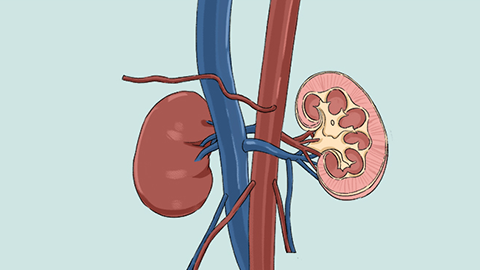
What to do when a stone becomes lodged in the distal ureter
A stone impacted in the distal ureter commonly causes severe pain—a condition clinically termed “renal colic.” Initial management should focus on spasmolysis and analgesia to alleviate patient discomfort. For distal ureteral stones, ureteroscopy with holmium laser lithotripsy is generally recommended as the first-line treatment.
Ureteroscopic holmium laser lithotripsy is a minimally invasive procedure. It involves inserting a ureteroscope transurethrally into the bladder and then advancing it into the ureter. Under direct endoscopic visualization, the holmium laser is used to fragment the impacted stone. Larger fragments may be retrieved using a stone forceps.
This approach rapidly relieves ureteral obstruction and alleviates associated clinical symptoms. However, if a stone remains lodged in the distal ureter for an extended period, it may lead to ureteral and renal hydronephrosis, potentially compromising renal function.
Ureteroscopic lithotripsy: Under anesthesia, a ureteroscope is introduced transurethrally through the bladder and into the ureter to reach the stone’s location. Under direct vision, the stone is fragmented using either ultrasonic lithotripsy or holmium laser, followed by extraction. Treatment selection depends on multiple factors, including stone size, prior history of spontaneous stone passage, duration of impaction, degree of obstruction, and presence of concomitant urinary tract obstruction or infection.
We hope the above information is helpful. Wishing you good health and well-being.





