


What should I do if my eyes feel very dry and gritty?
Mar 21, 2022
Source: Cainiu Health

Dr. Cui Xin
Introduction
First, apply a warm towel to the eyelids—perform this heat therapy three to four times daily, for five to ten minutes each session, maintaining the temperature at approximately 40°C.
Second, perform meibomian gland massage using your fingers; the specific technique involves closing your eyes before massaging.
Third, use artificial tear eye drops for treatment—for example, sodium hyaluronate eye drops, which are commonly prescribed.
Experiencing severe dryness and grittiness in the eyes is commonly attributable to dry eye syndrome—a prevalent ophthalmic condition. This disorder arises from age-related or pathological degeneration of the lacrimal glands, resulting in either reduced tear production or compromised tear quality. Consequently, patients may experience ocular dryness, grittiness, redness, mild visual blurring, photophobia, and an aversion to keeping their eyes open.
What can be done when the eyes feel extremely dry and gritty?
In general, diagnosis of dry eye syndrome typically involves clinical evaluation at a hospital, including Schirmer’s test (to assess tear secretion volume) and tear film break-up time (TBUT) measurement—to confirm the diagnosis and gauge disease severity. Management of dry eye syndrome should incorporate the following measures:
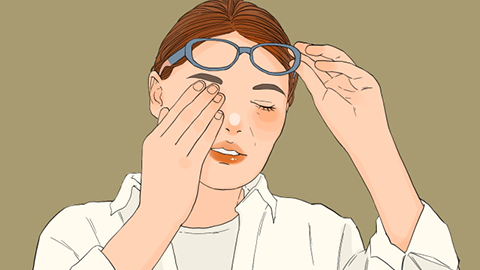
1. Apply warm compresses to the eyelids using a warm towel—three to four times daily for five to ten minutes each session, maintaining a temperature of approximately 40°C. If the towel cools during application, replace it with warm water to sustain optimal temperature. Warm compresses help improve the functional status of the lacrimal glands and enhance tear secretion.
2. Perform meibomian gland massage using your fingertips. To do so, gently close your eyes and use the pads of your fingers to massage the eyelids—from the bony orbital rim toward the lash line. This technique helps improve meibomian gland secretory function, particularly when performed immediately after warm compresses for enhanced efficacy.
3. Use artificial tear eye drops for symptomatic relief. Commonly prescribed options include sodium hyaluronate eye drops, polyethylene glycol eye drops, and polyvinyl alcohol eye drops. These formulations replenish ocular surface moisture and rapidly alleviate dryness and grittiness.
We hope the above information proves helpful to you.





