


What causes twitching of the left eyelid?
Apr 14, 2022
Source: Cainiu Health

Dr. Chen You
Introduction
Left-eye twitching: According to folk belief, left-eye twitching signifies incoming wealth, whereas right-eye twitching foretells misfortune. In reality, this symptom may also indicate hemifacial spasm—though its incidence is relatively low. In healthy individuals, excessive psychological stress or insufficient sleep can lead to transient hyperexcitability of the facial nerve, resulting in brief, self-limiting twitching that typically resolves spontaneously within one to two weeks—or at most, within one month. However, there exists a distinct pathological condition that develops gradually and progressively worsens over time.
In daily life, many people experience twitching of the left eyelid. Folklore commonly holds that “left-eye twitching brings wealth, while right-eye twitching foretells misfortune.” In fact, this is merely a superstitious belief. So what exactly causes left eyelid twitching?
What Causes Left Eyelid Twitching?
According to folk belief, left-eye twitching signifies incoming fortune, whereas right-eye twitching signals impending trouble. However, such twitching may actually indicate hemifacial spasm—though this condition is relatively rare. More commonly, ordinary individuals experiencing high psychological stress or insufficient sleep may develop transient overexcitation of the facial nerve, resulting in brief, self-limiting eyelid twitching that typically resolves spontaneously within one to two weeks—or at most, within one month. In contrast, there exists a pathological condition that develops gradually and progressively worsens over time. Regardless of physical interventions attempted, the symptoms become increasingly pronounced.
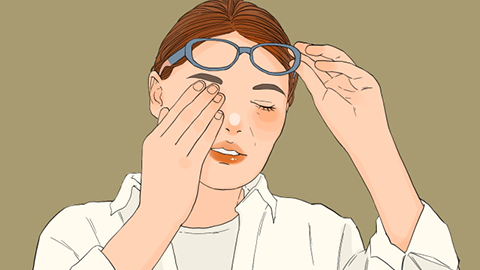
Specifically, if twitching consistently begins around the eye and gradually spreads downward to involve the corner of the mouth on one side of the face—and progressively worsens over a period exceeding six months—hemifacial spasm should be strongly suspected. Fortunately, this condition is treatable. The surgical procedure involves a minor craniotomy performed under general anesthesia. A 4-cm incision is made behind the ear on the affected side, followed by creation of a 1.5-cm burr hole in the skull. The surgeon then identifies and carefully separates the offending blood vessel compressing the facial nerve at the root exit zone.
A specialized material known as Teflon pledget is used to cushion and separate the nerve from the compressing vessel—this simple step is sufficient. The success rate of this surgery is 98%: among 100 patients undergoing the procedure, 98 achieve complete resolution of symptoms. This is a functional neurosurgical intervention designed to resolve the underlying problem without introducing new neurological deficits. We hope this explanation proves helpful to you.




