


What are the manifestations of Qi deficiency?
Apr 14, 2022
Source: Cainiu Health
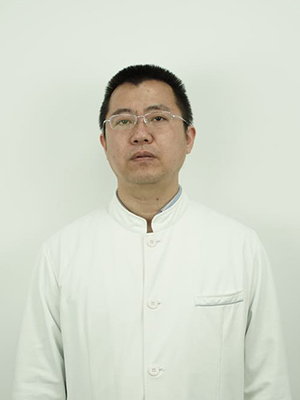
Dr. Ding Yu
Introduction
Qi deficiency can lead to delayed growth and development, diminished function of the zang-fu organs and meridians, blood stasis, or fluid retention—manifesting in various diseases. The body’s thermoregulation depends on the warming function of qi. If this warming function is impaired, symptoms such as aversion to cold, spontaneous sweating, and numbness in the limbs may occur. Qi also protects the muscular surface, preventing invasion by external pathogenic factors. When qi is deficient, the body becomes more susceptible to such external pathogens.
Qi deficiency is a well-known condition, yet many patients remain unfamiliar with its primary manifestations. What are the key signs and symptoms of qi deficiency?
What Are the Manifestations of Qi Deficiency?
Qi deficiency may lead to delayed growth and development, diminished function of the zang-fu organs and meridians, blood stasis, or fluid retention, among other disorders. The body’s thermoregulation relies on the warming function of qi. When this warming function is impaired, symptoms such as aversion to cold, spontaneous sweating, and numbness in the limbs may arise. Qi also serves to protect the muscular surface and defend against external pathogenic factors; thus, qi deficiency renders the body more susceptible to invasion by exogenous pathogens. The consolidating and controlling function of qi is reflected in its regulation of blood, essence (jing), and urine. When qi is deficient, this consolidating function weakens, potentially resulting in bleeding, seminal emission, or enuresis. “Qi transformation” (qi hua) has two meanings: first, the mutual generation and transformation among various forms of qi; second, the metabolic processes that convert nutrients and fluids into essential substances for bodily functions.

Clinically, qi deficiency can be categorized as lung-qi deficiency, heart-qi deficiency, spleen-qi deficiency, or kidney-qi deficiency. In severe cases, it may progress to separation of qi and blood, or even organ prolapse—both of which are clinical manifestations of qi deficiency. For lung-qi deficiency, treatment focuses on tonifying lung-qi, using Bu Fei Tang (Lung-Tonifying Decoction); for spleen-qi deficiency, treatment aims to strengthen the spleen and augment qi, employing Si Jun Zi Tang (Four Gentlemen Decoction); and for kidney-qi deficiency, treatment involves nourishing the kidneys and reinforcing qi, typically with Shen Qi Wan (Kidney-Qi Pill).

First, it is essential to understand the concept of “qi.” In Traditional Chinese Medicine (TCM), “qi” has two principal meanings: (1) a subtle, vital substance that constitutes the human body and sustains life activities—such as gu qi (food-essence qi) and kong qi (air-breath qi); and (2) the physiological functions of the zang-fu organs. We hope this explanation proves helpful to you!




