


What Causes Scrotal Eczema?
Apr 26, 2022
Source: Cainiu Health

Dr. Liu Wan
Introduction
Scrotal eczema is a common dermatological condition characterized by lesions confined to the scrotal skin, perianal region, and penis. It primarily results from decreased immune resistance, endocrine imbalance, and external factors. Topical medications may induce localized eczematous reactions. Prolonged occlusion and moisture in the scrotal area—combined with excessive rubbing or scratching due to pruritus—can cause local skin injury, leading to persistent, non-healing lesions.
Scrotal eczema in men is a common urological condition—not an infection—and significantly disrupts patients’ daily lives. Clinically, scrotal eczema is merely a symptom, not a disease in itself; it arises secondary to underlying causes. Thus, the appearance of scrotal eczema in men signals the presence of an underlying health issue. So, what causes scrotal eczema?
What Causes Scrotal Eczema?
Scrotal eczema is a common dermatological condition confined primarily to the skin of the scrotum, perianal region, and penis. It mainly results from decreased immune resistance, endocrine imbalance, and external factors—such as wearing synthetic or tight-fitting underwear—which impair heat dissipation. Additionally, topical medications may trigger localized eczematous reactions. Individuals who work for prolonged periods in damp environments are also at risk. Persistent local moisture and poor ventilation in the scrotal area can lead to pruritus, followed by excessive rubbing or scratching, causing skin injury that fails to heal promptly. Scrotal eczema predominantly affects young and middle-aged adults and occurs more frequently during summer.
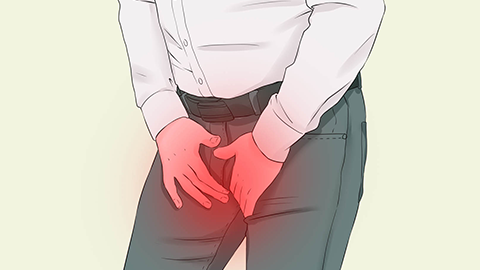
In some cases, even physical stimuli—including sunlight exposure, wind-heat, or cold—can precipitate scrotal eczema. Furthermore, its development may be associated with neurological dysfunction, endocrine disorders, indigestion, gastrointestinal diseases, or metabolic abnormalities. In summary, the high recurrence rate of scrotal eczema is closely linked to heightened patient sensitivity and the diverse origins of allergens or irritants.
Eczema causes intense pruritus, resulting in significant discomfort and potentially impairing normal work and daily activities. Therefore, it is crucial to avoid further local irritation: refrain from scratching the affected area with hands, avoid applying strongly irritating topical agents, and—especially—do not use topical corticosteroids, as these may exacerbate the condition. We hope this information proves helpful!


