


Distinguishing Between Premenstrual Symptoms and Early Pregnancy Signs
May 15, 2022
Source: Cainiu Health

Dr. Lv Aiming
Introduction
Distinguishing Premenstrual Symptoms from Early Pregnancy:
A few days before menstruation, some women experience mild uterine contractions and a sensation of heaviness or downward pressure in the lower abdomen—symptoms not typically associated with early pregnancy.
During menstruation, basal body temperature rises slightly above normal and gradually returns to baseline levels as menstruation ends. In contrast, while early pregnancy also elevates basal body temperature, this elevated temperature persists throughout the entire pregnancy.
For individuals with relatively simple thinking patterns, distinguishing between certain physical symptoms can be challenging—for instance, differentiating early pregnancy from premenstrual symptoms. Since some symptoms of early pregnancy overlap with those experienced before menstruation, what are the key differences between premenstrual symptoms and early pregnancy? Let’s explore them together.
Differences Between Premenstrual Symptoms and Early Pregnancy
The distinction between premenstrual symptoms and early pregnancy is often subtle—some people may even find it difficult to tell them apart. Both conditions can cause mild breast fullness or tenderness. Therefore, the most reliable methods for differentiating premenstrual symptoms from early pregnancy are urine pregnancy testing and measurement of serum human chorionic gonadotropin (hCG) levels. A few days before menstruation begins, some women experience mild uterine contractions along with a sensation of heaviness or downward pressure in the lower abdomen. In contrast, such sensations are typically absent during early pregnancy, as the uterus does not contract at this stage—thus, no abdominal dragging or aching sensation occurs.

During menstruation, basal body temperature tends to rise slightly above normal—typically ranging between 36.5°C and 36.9°C—and gradually returns to baseline after menstruation ends. In early pregnancy, body temperature also remains elevated compared to usual, but unlike the transient premenstrual rise, it stays consistently elevated throughout gestation, maintaining a higher-than-normal level across the entire pregnancy.
Premenstrual symptoms and early pregnancy may also differ subtly in terms of dietary preferences. During pregnancy, many women experience noticeable changes in taste and food cravings—for example, someone who previously disliked sweets may suddenly develop a strong preference for them. In contrast, women experiencing premenstrual symptoms generally do not undergo such dramatic shifts in food preferences; if they previously disliked sweets, they are unlikely to develop an intense craving for them solely due to impending menstruation.
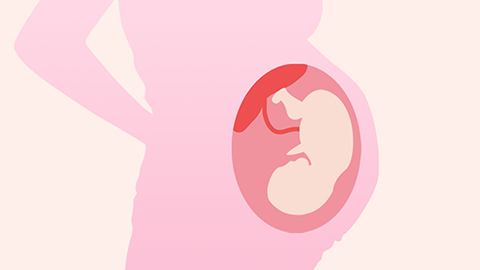
The above outlines the main differences between premenstrual symptoms and early pregnancy. We hope this information proves helpful to you.



