


What Should You Do If Your Baby Develops Heat Rash?
May 18, 2022
Source: Cainiu Health

Dr. Liu Wan
Introduction
Infants with prickly heat (miliaria) may be treated topically with calamine lotion or baby powder. Ensure the living environment is well-ventilated and cool. Prickly heat is a dermatological condition caused by excessive sweating in warm, humid environments, coupled with impaired sweat excretion. High ambient temperature and humidity lead to excessive sweating that fails to evaporate efficiently. This causes maceration of the epidermal stratum corneum, resulting in obstruction of the sweat ducts and subsequent retention of sweat within the ducts.
A common skin condition that frequently occurs during hot summer months is commonly known as “prickly heat” (or “heat rash”). Medically, it has three distinct types: miliaria rubra (red miliaria), miliaria crystallina (crystalline miliaria), and miliaria alba (white miliaria). So, what should you do if your infant develops prickly heat?
What to Do If Your Infant Develops Prickly Heat
For infants with prickly heat, topical application of calamine lotion or baby powder formulated for heat rash may be helpful. Additionally, ensure the infant’s living environment is well-ventilated and cool. Prickly heat arises in warm, humid conditions when excessive sweating occurs but sweat cannot adequately evaporate. High ambient temperature and humidity lead to overproduction of sweat that fails to evaporate efficiently. This causes maceration (softening and breakdown) of the epidermal stratum corneum, resulting in obstruction of the sweat ducts. Sweat then accumulates within the ducts, increasing intraductal pressure until the duct ruptures. Sweat leaks into surrounding tissues, triggering an inflammatory reaction and forming small vesicles and papules at the openings of the sweat pores.
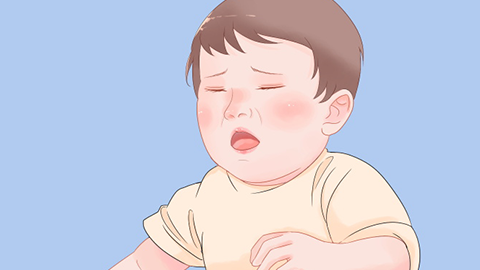
Prickly heat is typically asymptomatic or associated only with mild pruritus (itching) or a burning sensation. Clinically, it is classified according to the depth and location of sweat duct obstruction, as well as the composition of the vesicular fluid. Miliaria crystallina (crystalline miliaria), also known as “white miliaria,” results from leakage of sweat into or just beneath the stratum corneum. It manifests as dense clusters of pinhead- to millet-sized, thin-walled, clear vesicles—primarily on the trunk and neck. The base of these vesicles shows no erythema (redness), and they rupture easily.
Miliaria rubra (red miliaria) occurs when sweat leaks out deeper within the epidermis. It presents as grouped pinhead- to millet-sized red papules and papulovesicles, often accompanied by pruritus and a burning sensation. Symptoms usually resolve spontaneously within approximately one week. We hope this information proves helpful to you!







