What type of eye massage is suitable for high myopia?
Jun 29, 2022
Source: Cainiu Health

Dr. Chen You
Introduction
High myopia can be treated using a nine-acupoint massage method. The Jingming (BL-1) acupoint is especially important, as its name literally means “brightening the eyes.” Jingming is a convergent point where the Hand and Foot Yangming meridians, the Hand and Foot Taiyang meridians, as well as the Yin Qiao and Yang Qiao vessels all meet. Given its association with so many meridians, it exerts a profound therapeutic effect. Even practitioners of spinal manipulation routinely knead the Jingming acupoint.
As academic and occupational pressures increase, many people develop eye problems—most commonly myopia. Some patients suffer from high myopia, which exacerbates visual blurriness. If myopia remains uncorrected, the refractive error may progressively worsen. So, what eye massage techniques are suitable for individuals with high myopia?
Eye Massage Techniques for High Myopia
Individuals with high myopia may benefit from the “Nine-Point Acupressure Massage” technique. The Jingming (BL-1) acupoint is especially important: its name literally signifies “bright eyes,” and it serves as a convergence point for the Hand and Foot Yangming and Hand and Foot Taiyang meridians, as well as the Yin Qiao and Yang Qiao vessels. Given its extensive connections to multiple meridians, Jingming exerts profound therapeutic effects. Practitioners of spinal manipulation also routinely apply pressure to this point. Typically, the technique involves first gently pressing the point, followed by sustained compression—often referred to as “pressing.” After tapping the point, apply firm yet gentle up-and-down pressure to enhance stimulation. Since Jingming lies at the inner canthus of the eye, light circular massage should follow compression—but avoid excessive force. Close your eyes during the massage.
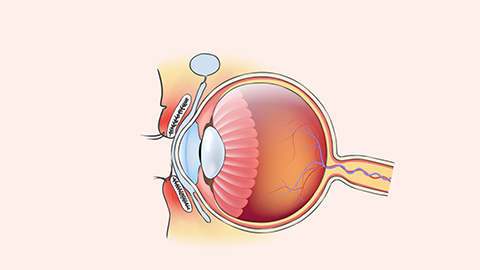
Another key acupoint is Sibai (ST-2). To locate Sibai, ask the patient to look straight ahead; the point lies in a depression directly below the infraorbital margin. This point lies along a critical neurovascular pathway that nourishes the periorbital region. Stimulating Sibai through massage enhances vascular perfusion and improves local blood flow.
In daily life, it is advisable to consume zinc-rich foods such as oysters and lean meats, as well as selenium-rich foods like asparagus and fish. Drinking tea regularly is also beneficial, owing to its potent antioxidant properties—which help prevent and slow the progression of myopia. We hope this information proves helpful to you.