What are the symptoms of cryptorchidism?
Aug 24, 2022
Source: Cainiu Health

Dr. Li Mingchuan
Introduction
The most common symptom of cryptorchidism is an empty scrotum on the affected side. Some patients have unilateral involvement, while others have bilateral involvement. In some cases, a testis-like mass can be palpated in the inguinal region on the side of the empty scrotum—this is termed an inguinal cryptorchid testis. In other cases, the testis cannot be palpated on the body surface, and ultrasound fails to detect it; the testis may reside within the abdominal cavity or may be absent altogether.
During a routine hospital physical examination, I was diagnosed with cryptorchidism. What symptoms are associated with cryptorchidism?
What Symptoms Are Associated with Cryptorchidism?
The most common symptom of cryptorchidism is an empty scrotum on the affected side. Some patients have unilateral involvement, while others have bilateral involvement. In some cases, a testis-like mass may be palpable in the inguinal region on the side of the empty scrotum—this is termed “inguinal cryptorchidism.” In other cases, the testis cannot be palpated on the body surface, nor visualized by ultrasound; it may reside within the abdominal cavity or be absent altogether. The greatest risk posed by cryptorchidism is abnormal testicular development, which can lead to male infertility. Moreover, cryptorchidism is an independent risk factor for testicular tumors.
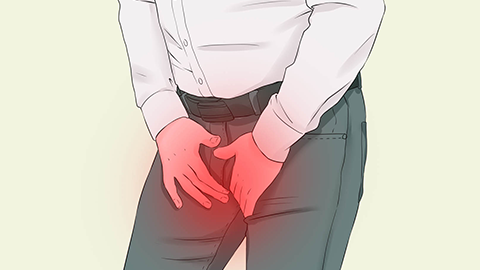
In children with cryptorchidism, the scrotum is typically underdeveloped and no testis can be palpated within it—making diagnosis relatively straightforward. If no testis is palpable within the scrotum, ultrasound should be the first-line screening tool. MRI and laparoscopy are valuable for diagnosing high-lying (abdominal) cryptorchidism. Note: Cryptorchidism is frequently associated with patent processus vaginalis, and even inguinal hernias may protrude into the scrotum; such hernial sacs are often mistakenly identified as testes during physical examination. Therefore, especially in cases of incarcerated hernia, clinicians must carefully review the patient’s history and meticulously examine the scrotum to confirm the presence or absence of testes.
Cryptorchidism can be treated surgically. After surgery, regular follow-up examinations of the testes are essential to ensure normal development. Diet should initially be light and nutritious; once full recovery is achieved, patients may resume a normal diet. We hope this information is helpful to you.