


What Causes Nosebleeds in Two-Year-Olds?
Aug 24, 2022
Source: Cainiu Health

Dr. Xie Zixing
Introduction
Nosebleeds in two-year-old children may be caused by excessively dry ambient air or overly forceful nose-picking. In rare cases, they may result from nasal foreign bodies. When the surrounding environment is too dry, moisture evaporates from the nasal mucosa, causing mucosal damage and exposing underlying blood vessels. The vessel walls become brittle, leading to leakage of blood—resulting in nosebleeds. This can be alleviated by increasing ambient humidity.
In adults, epistaxis (nosebleeds) may occur due to excessive internal heat accumulation or overconsumption of tonifying herbal remedies. What, then, causes nosebleeds in a two-year-old child?
Causes of Nosebleeds in Two-Year-Old Children
Nosebleeds in two-year-olds are commonly caused by excessively dry ambient air or overly forceful nose-picking. In rare cases, they may result from nasal foreign bodies. When the surrounding environment is overly dry, moisture evaporates from the nasal mucosa, leading to mucosal damage. This exposes underlying blood vessels, whose walls become fragile and prone to leakage—resulting in epistaxis. Increasing ambient humidity can help alleviate this condition.

Nose-picking may injure the nasal mucosa and trigger epistaxis; it may also predispose the child to infection. Parents should closely monitor their child’s behavior and discourage nose-picking or insertion of foreign objects into the nasal cavity. A visit to an otolaryngologist is recommended for thorough evaluation and timely treatment.
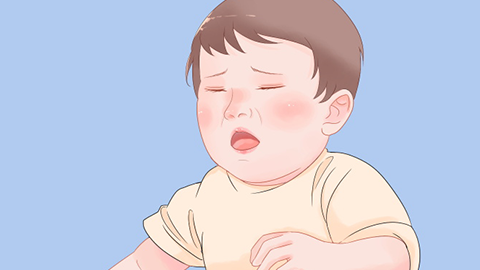
Sudden epistaxis in a two-year-old warrants immediate attention. Appropriate management is essential to prevent blood from flowing backward into the airway and causing asphyxiation. Due to their limited self-control and young age, toddlers are particularly vulnerable to airway obstruction from retrograde blood flow—a potentially life-threatening emergency. If epistaxis occurs, parents should lay the child supine on a flat surface with the head tilted to one side to allow blood to drain externally and prevent aspiration into the trachea. Alternatively, parents may hold the infant upright with the head and body aligned horizontally and the head tilted to one side to facilitate drainage. We hope this information proves helpful. Wishing you good health and happiness!


