


Itchy inner canthus: A symptom of keratitis
Aug 24, 2022
Source: Cainiu Health

Dr. Chen You
Introduction
The most common clinical manifestation of keratitis is marked ocular pain, accompanied by varying degrees of conjunctival injection, foreign-body sensation, photophobia, epiphora, increased ocular discharge, and decreased visual acuity. On examination, obvious conjunctival hyperemia, ciliary flush, or mixed hyperemia is observed, along with infiltrative lesions of varying morphology on the cornea, resulting in corneal opacity. If the condition progresses further, corneal ulceration may develop.
Itching at the corners of the eyes is closely associated with excessive eye use, particularly among office workers. Prolonged eye strain can lead to eye fatigue, which in turn may cause itching at the inner or outer canthus. But could itching at the inner canthus indicate keratitis?
Symptoms of Keratitis Associated with Itching at the Inner Canthus
The most common clinical manifestations of keratitis include significant ocular pain, varying degrees of conjunctival redness and swelling, foreign-body sensation, photophobia, excessive tearing, increased ocular discharge, and decreased visual acuity. Ophthalmic examination typically reveals obvious conjunctival hyperemia, ciliary injection, or mixed vascular congestion. Corneal infiltrates—presenting in various forms—are also observed, leading to corneal opacity. If left untreated, the condition may progress to corneal ulceration, bulging of the posterior elastic lamina (Descemet’s membrane), corneal perforation, iris prolapse, and hypopyon.
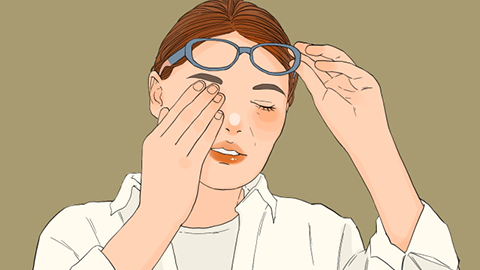
Patients must avoid rubbing their eyes, as this may exacerbate corneal injury. Secondly, prompt treatment with anti-infective topical ophthalmic solutions is essential to control keratitis and alleviate ocular itching. For bacterial keratitis, levofloxacin ophthalmic solution or tobramycin ophthalmic solution may be prescribed. For viral keratitis, antiviral agents such as acyclovir ophthalmic solution or recombinant human interferon α2B ophthalmic solution are appropriate options.

In cases of severe symptoms, patients should seek timely medical evaluation and treatment at a hospital. We hope this information has been helpful to you.





