


Is 100-degree astigmatism equivalent to myopia?
Aug 24, 2022
Source: Cainiu Health

Dr. Chen You
Introduction
Astigmatism of 100 degrees is not myopia. If a person has myopia accompanied by 100 degrees of astigmatism, this means the cornea exhibits 100 degrees of refractive error (myopic astigmatism) along a specific meridian, which is equivalent to an additional 100-degree myopic correction in that axis. If the astigmatism is mild, its value may be incorporated into the spherical (myopic) correction when prescribing eyeglasses. However, if the astigmatism is significant, cylindrical lenses are required for proper correction.
Astigmatism is a refractive error of the eye caused by uneven thickness or curvature of the cornea, resulting in inconsistent refractive power across different meridians. Consequently, light passing through these meridians fails to converge at a single focal point and cannot focus precisely on the retina to form a clear image. So, does 100-degree astigmatism equate to myopia?
Does 100-degree astigmatism mean myopia?
A 100-degree astigmatism diagnosis does not, by itself, indicate myopia. However, if the astigmatism is accompanied by myopia—specifically, if there is 100 degrees of myopic astigmatism—this means that along a particular corneal axis, the refractive error corresponds to −1.00 diopter (D) of myopia. In cases of mild astigmatism, corrective lenses may incorporate the astigmatic correction into the spherical (myopic) prescription. For more pronounced astigmatism, cylindrical (toric) lenses are required for accurate correction. Individuals with astigmatism commonly experience blurred vision, eye strain, headaches, visual fatigue, and difficulty sustaining near-vision tasks.
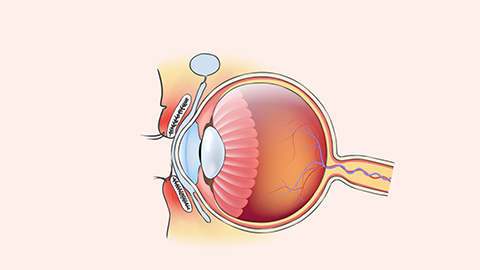
Patients should avoid being overly selective about food, as this may lead to nutritional imbalances that adversely affect vision. It is advisable to regularly consume foods rich in beta-carotene and zinc to enhance ocular resistance and accommodative function. After prolonged visual tasks—whether reading or viewing electronic screens—continuous use should not exceed one hour. Following each hour, performing eye exercises and gently massaging the periorbital area can help relieve intraocular pressure.
In daily life, maintain a regular, balanced diet; avoid spicy, irritating, or excessively rich foods, and refrain from binge eating or staying up late. We hope this information proves helpful.




