


Is subconjunctival hemorrhage dangerous, and how should it be treated?
Sep 13, 2022
Source: Cainiu Health

Dr. Jiang Weimin
Introduction
Subconjunctival hemorrhage is generally low-risk and the blood is usually reabsorbed quickly, within one to two weeks. In fact, it is not dangerous in itself. Treatment for subconjunctival hemorrhage mainly involves two aspects: stopping the bleeding. During the first 3 to 5 days after the bleed, cold compresses can be applied—using a towel-wrapped ice pack placed over the eye three times a day for about ten minutes each time. This helps constrict blood vessels and stop the bleeding.
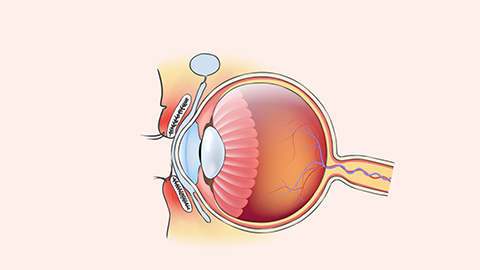
The conjunctiva of the eye, commonly known as the conjunctiva, typically experiences subconjunctival hemorrhage when small blood vessels or capillaries under the conjunctiva rupture. So, is subconjunctival hemorrhage dangerous, and how should it be treated?
Is Subconjunctival Hemorrhage Dangerous and How Should It Be Treated?
Subconjunctival hemorrhage is generally not dangerous. The blood is usually absorbed quickly—within one to two weeks. In fact, it poses no inherent risk. Treatment for subconjunctival hemorrhage mainly involves two aspects, specifically: stopping the bleeding. Within the first 3–5 days after bleeding occurs, cold compresses can be applied. Wrap an ice pack in a towel and apply it to the eye area three times a day for about ten minutes each time. This helps constrict blood vessels and stop the bleeding. After the bleeding has stopped, warm compresses may be used to promote absorption of the blood. Similarly, use a warm towel to apply heat to the eye three times daily for about ten minutes per session.

Subconjunctival hemorrhage can be associated with certain medical conditions, the most common being hypertension. Recurrent or frequent episodes of subconjunctival hemorrhage may indicate high blood pressure. If hypertension is suspected, a comprehensive physical examination is recommended to check for other potential problems, including evaluation of the ocular fundus (back of the eye). Routine fundus examination can detect any retinal bleeding or signs of systemic bleeding elsewhere in the body. Therefore, undergoing a full-body checkup is highly advisable.
If this condition causes concern, visit a hospital where a doctor can perform a simple, comprehensive physical examination. However, such cases are generally uncommon. There's no need to panic—most people experience no serious issues and have only isolated, benign bleeding episodes. We hope this article has been helpful to you. Wishing you good health and a happy life!






