What are the manifestations of foreign bodies in the conjunctiva?
Nov 17, 2025
Source: Cainiu Health

Dr. Wang Shuai
Introduction
Common symptoms of conjunctival foreign bodies include a strong sensation of foreign body in the eye, frequent blinking and tearing, redness and congestion of the eye, photophobia, sharp pain, and increased eye discharge. Once a foreign body enters the conjunctiva, it continuously irritates the conjunctival tissue, causing a significant sensation of something being in the eye—often described as if fine particles or fibers are attached inside the eye. This discomfort persists despite frequent blinking, and patients often have an involuntary urge to rub their eyes.
Common symptoms of conjunctival foreign bodies generally include a strong sensation of a foreign body in the eye, frequent blinking and tearing, redness and congestion of the eye, photophobia and pain, as well as increased eye discharge. Specific details are as follows:
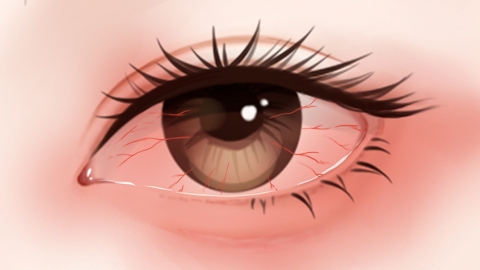
1. Strong sensation of a foreign body: Once a foreign object enters the conjunctiva, it continuously irritates the conjunctival tissue, causing a distinct sensation that something is in the eye—often described as feeling like small particles or fibers stuck inside. This sensation persists despite frequent blinking, leading patients to instinctively rub their eyes.
2. Frequent blinking and tearing: The irritation from the foreign body triggers the eye's defense mechanisms, increasing tear production. At the same time, the eye muscles reflexively contract, resulting in frequent blinking, which attempts to flush out the foreign object with tears or reduce its irritation to the conjunctiva.
3. Redness and congestion: Friction from the foreign body or mild local inflammation can cause dilation and congestion of conjunctival blood vessels, making the white part of the eye appear red or pink. The congestion typically surrounds the area where the foreign body is lodged, and the longer the object remains, the more pronounced the redness may become.
4. Photophobia and sharp pain: If the foreign body irritates the conjunctiva or the corneal surface (especially when located near the cornea), it increases the eye’s sensitivity to light, causing photophobia. This is often accompanied by a stabbing or stinging pain, which worsens under bright light, prompting patients to squint or avoid light exposure.
5. Increased eye discharge: Local inflammatory reactions caused by the foreign body lead to increased ocular secretions, which are typically mucoid or mucopurulent. These secretions may accumulate along the eyelid margins or in the corners of the eyes. If the foreign body remains for an extended period without removal, the amount of discharge may gradually increase and darken in color.
When any of the above symptoms occur and a conjunctival foreign body is suspected, rubbing the eye should be avoided to prevent corneal scratches or worsening inflammation. Gently blinking to encourage natural tear flushing may help dislodge the object. However, if the foreign body does not come out spontaneously, prompt visit to an ophthalmologist is necessary. A healthcare professional will use specialized instruments to safely remove the object, preventing potential complications such as infection due to delayed treatment.