


How to remove hair dye from skin
Sep 02, 2024
Source: Cainiu Health

Dr. Liu Wenmin
Introduction
Under normal circumstances, hair dye stains on the skin can be treated by washing with soap, wiping with olive oil, removal methods such as chemical peels (using alpha hydroxy acids), cryotherapy, or fractional laser therapy. Washing with soap is suitable when the hair dye is still wet or has just been applied, as the surfactants in soap can reduce the adhesion of the dye. If these methods are ineffective, medical aesthetic treatments can also be used to help remove hair dye from the skin.
In general, hair dye stains on the skin can be treated through methods such as washing with soap, wiping with olive oil, chemical peels using alpha hydroxy acids (AHA), cryotherapy, and fractional laser therapy. Soap washing is suitable when the hair dye has not yet dried or was applied recently, as the surfactants in soap reduce the adhesion of the dye. Olive oil wiping is more appropriate for dried or stubborn dye stains; being a natural oil, it penetrates between the skin and the dye to help loosen and remove it. If these methods are ineffective, medical aesthetic treatments may be considered to remove residual dye from the skin. In case of discomfort, prompt medical attention is recommended.
Analysis of Procedures for Removing Hair Dye:
Procedure Name |
AHA Chemical Peel |
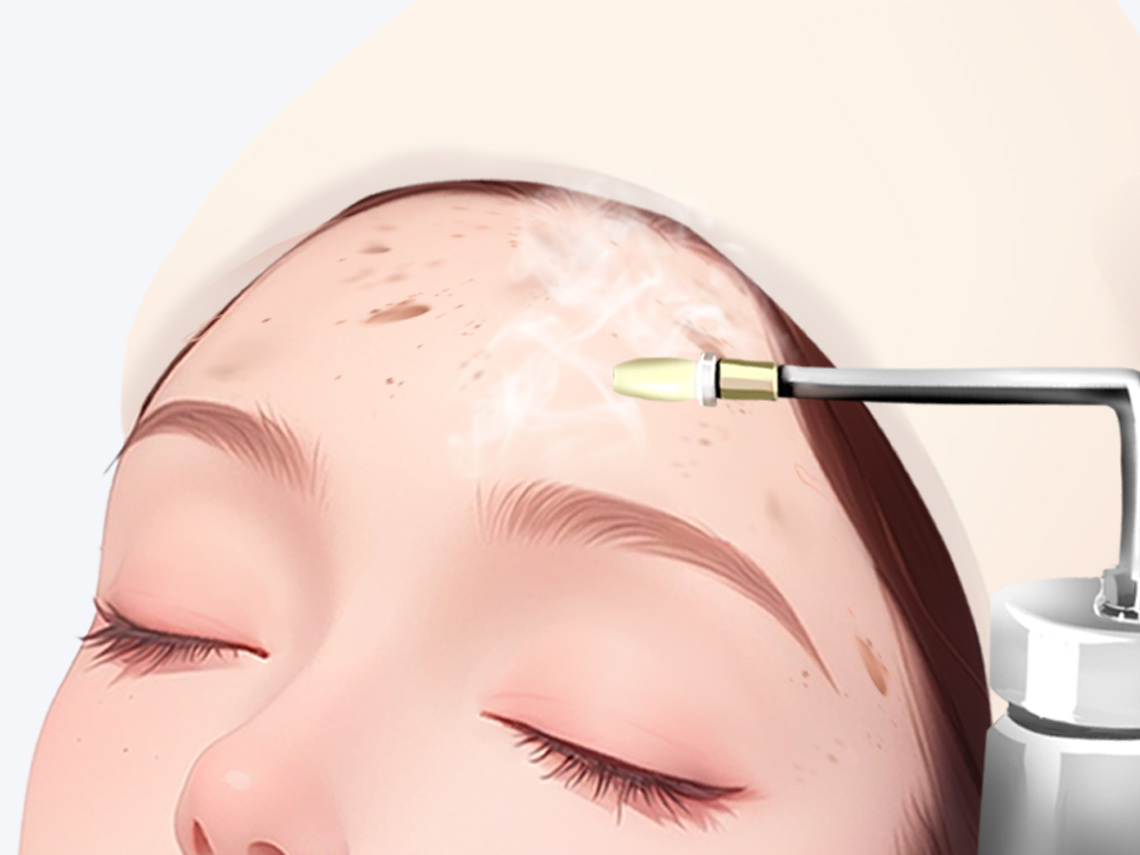
Cryotherapy |
Fractional Laser |
Reference Image |
|
|
|
Treatment Principle |
High-concentration AHA induces controlled skin damage to promote skin regeneration |
Rapid freezing to destroy dyed cells' structure |
Laser kills bacteria and stimulates collagen regeneration |
Indications |
Suitable for individuals not allergic to acids |
Dried or difficult-to-remove dye stains |
Dried or difficult-to-remove dye stains |
Reference Price |
2,000–4,000 RMB per session |
200–1,000 RMB per session |
1,500–3,000 RMB per session |
Advantages |
1. Noticeable results 2. Minimal skin damage |
1. Minimally invasive 2. Simple procedure |
1. Improves skin texture 2. High safety profile |
Disadvantages |
1. High cost 2. Risk of allergic reaction |
1. Limited effectiveness 2. Blistering 3. Redness and swelling |
1. Risk of infection 2. Burns |


It is important to avoid excessive scrubbing during cleaning to prevent soft tissue injury. If irritation occurs or removal is ineffective, consult a qualified physician for proper evaluation and treatment.



