


How to tell if ovulation has occurred using an ovulation test strip
Dec 24, 2024
Source: Cainiu Health

Dr. Zhang Lu
Introduction
Ovulation test strips are tools used by women to predict the time of ovulation by detecting the levels of luteinizing hormone (LH) in urine. Interpretation methods include strongly positive results, gradually deepening color, continuously deep color, transition from weakly positive to strongly positive, and negative results. When using ovulation test strips, one should follow the correct usage instructions and perform the test within the appropriate time frame.
Ovulation test strips are tools used by women to predict ovulation time by detecting the level of luteinizing hormone (LH) in urine. There are several different interpretation methods, including strong positive results, gradually deepening color, continuously deep color, transition from weak positive to strong positive, and negative results. Detailed explanations are as follows:
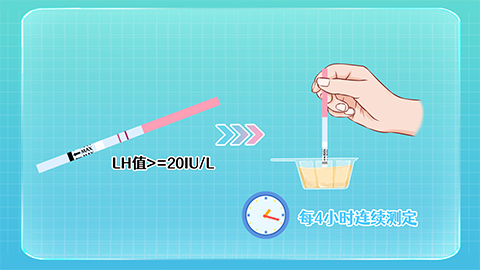
1. Strong Positive Result: When the test line on the ovulation test strip is as dark as or darker than the control line, it indicates a strong positive result. This typically means that the LH concentration has reached its peak, signaling that natural ovulation will likely occur within the next 12 to 48 hours.
2. Gradually Deepening Color: If the test line color gradually becomes darker over time, it suggests that the luteinizing hormone level is rising and ovulation may occur in the near future. Women should continue close monitoring to more accurately determine the timing of ovulation.
3. Continuously Deep Color: If the test line remains dark for several consecutive days of testing, it may indicate that the woman is currently in her ovulation period. Conception is still possible during this time if intercourse occurs.
4. Transition from Weak Positive to Strong Positive: When the ovulation test result changes from weak positive to strong positive, it also indicates that ovulation is about to occur. A weak positive result is indicated by a test line that is lighter than the control line, while a transition to a strong positive result signifies that the LH level has reached its peak.
5. Negative Result: If only one red line appears on the ovulation test strip, or if the test line is clearly lighter than the control line, it indicates that the peak level of LH in the urine has not yet been reached or that ovulation has already occurred. Continued monitoring is necessary at this stage.
When using ovulation test strips, it is important to follow the correct usage instructions and perform testing within the appropriate timeframe to improve accuracy.



