


How to read ovulation test strips
Dec 31, 2024
Source: Cainiu Health

Dr. Zhang Lu
Introduction
Under normal circumstances, ovulation test strips are primarily used to detect the level of luteinizing hormone (LH) in urine, helping women predict their ovulation timing. Result interpretations may include invalid result, strongly positive result, positive result, weakly positive result, and negative result. If necessary, it is recommended to consult a physician. However, ovulation test strips can only predict the timing of ovulation and cannot confirm whether ovulation has already occurred.
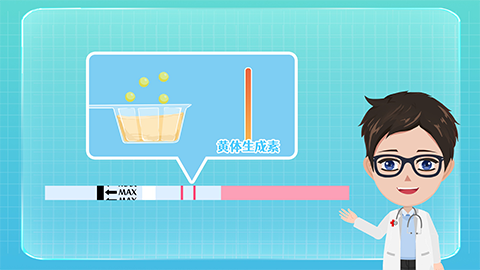
Generally, ovulation test strips are mainly used to detect the level of luteinizing hormone (LH) in urine to help women predict their ovulation time. Result interpretations may include invalid result, strongly positive result, positive result, weakly positive result, and negative result. If necessary, it is recommended to consult a doctor for advice. The detailed explanations are as follows:
1. Invalid Result
If the control line does not appear, regardless of whether a test line appears, the test result is considered invalid. This may be due to poor test strip quality or improper operation.
2. Strongly Positive Result
When the test line appears significantly darker than the control line, it indicates a strongly positive result. This suggests that the luteinizing hormone level has reached a very high value, and ovulation is highly likely to occur within 12–24 hours.
3. Positive Result
If the test line is as dark as or darker than the control line, this indicates a positive result. It suggests that the LH surge has occurred in the urine, and ovulation usually may occur within 24–48 hours.
4. Weakly Positive Result
If the test line appears but its color is clearly lighter than that of the control line, the result is weakly positive. This may indicate that the luteinizing hormone level is rising, approaching the ovulation day but has not yet reached its peak.
5. Negative Result
When the test line does not appear or appears very faint while the control line is visible, the result is negative. This indicates that the level of luteinizing hormone in the urine is low, the ovulation peak has not yet arrived, and ovulation may still be some time away.
However, ovulation test strips can only predict the timing of ovulation and cannot confirm whether ovulation has already occurred. To increase the chances of pregnancy, it is recommended to increase the frequency of intercourse during the period of consecutive positive results.




