


Can I still get tetanus after applying iodophor?
Jan 22, 2025
Source: Cainiu Health

Dr. Yang Ziqi
Introduction
Under normal circumstances, if the wound is shallow and has minimal contamination, applying povidone-iodine usually prevents tetanus. However, if the individual has not received the tetanus vaccine and the wound is deep and heavily contaminated, tetanus may still occur. Therefore, in addition to disinfecting the wound with povidone-iodine, it is recommended to receive the tetanus vaccine on schedule to enhance the body's immunity against Clostridium tetani.
Generally speaking, if a wound is shallow and not heavily contaminated, applying povidone-iodine usually prevents tetanus. However, if the person has not received a tetanus vaccination and the wound is deep and heavily contaminated, it is still possible to develop tetanus. Detailed explanation is as follows:
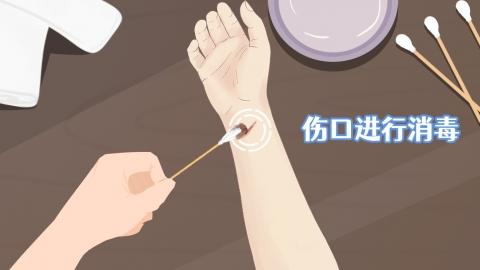
Clostridium tetani is an anaerobic bacterium that can grow and multiply only in oxygen-free environments. Povidone-iodine is a broad-spectrum antiseptic that can rapidly kill various bacteria, including Clostridium tetani. Therefore, if a wound is shallow and not significantly contaminated, applying povidone-iodine can effectively inhibit the growth and proliferation of Clostridium tetani, thus preventing the occurrence of tetanus.
If there are foreign bodies or necrotic tissues deep within the wound, even disinfecting with povidone-iodine may not completely eliminate Clostridium tetani. Infections are especially likely when wounds are deep, heavily contaminated, or have come into contact with objects contaminated by feces, soil, or similar substances, significantly increasing the risk of tetanus. Additionally, improper wound management or lack of tetanus vaccination may also lead to tetanus.
Therefore, in addition to disinfecting wounds with povidone-iodine, it is recommended to receive tetanus vaccinations on schedule to enhance the body's immunity against Clostridium tetani.




