


Is it necessary to perform an immediate uterine evacuation after a miscarriage?
Jan 24, 2025
Source: Cainiu Health

Dr. Zhang Lu
Introduction
In general, whether immediate curettage is required after a miscarriage mainly depends on the completeness of the miscarriage. If the miscarriage is complete, immediate curettage may not be necessary. However, if the miscarriage is incomplete, curettage is required. In daily life, women should pay attention to their physical condition and seek timely medical attention if any abnormal symptoms occur, in order to reduce the risk of incomplete miscarriage and related complications.
Generally, whether immediate curettage is required after a miscarriage mainly depends on the completeness of the miscarriage. If the miscarriage is complete, immediate curettage may not be necessary; however, if the miscarriage is incomplete, curettage may be required. Detailed analysis is as follows:
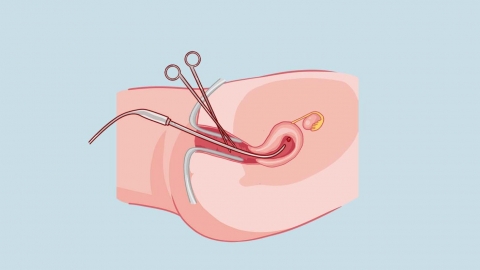
If a complete miscarriage occurs, meaning there are no embryonic or other tissue residues left in the uterine cavity and the uterus has largely recovered, then a curettage procedure is unnecessary. A complete miscarriage indicates that the embryo and associated tissues have been completely expelled, leaving no residue in the uterine cavity, thus making curettage unnecessary.
However, if an incomplete miscarriage occurs, meaning there are embryonic or other tissue residues remaining in the uterine cavity, curettage might be necessary. The urgency of curettage depends on the amount and nature of the residue. If only a small amount of residue is present and there are no severe symptoms such as heavy bleeding or infection, medication may sometimes be used to help expel the remaining tissue, avoiding the need for immediate curettage. However, if there is a large amount of residue, or if complications such as bleeding or infection have already developed, or if the residue has remained for a long time and the tissue has become organized, prompt curettage should be performed to ensure complete removal of the residue and prevent further damage to the uterus.
In daily life, women should pay attention to their physical condition and seek timely medical attention if any abnormal symptoms occur, in order to reduce the risk of incomplete miscarriage and related complications.


