


How to treat incision scars
Jan 24, 2025
Source: Cainiu Health

Dr. Liu Wenmin
Introduction
In general, surgical scar treatment can be achieved through daily care, medication, laser therapy, surgical excision, radiation therapy, and other methods. Regarding daily care, patients should keep the scar area clean and dry, avoiding friction and pressure on the scar. At the same time, attention should also be paid to dietary regulation, avoiding foods that may cause pigmentation, such as brown sugar, light soy sauce, and others.
Generally, incision scars can be treated through daily care, medication, laser therapy, surgical excision, and radiotherapy. The detailed analysis is as follows:
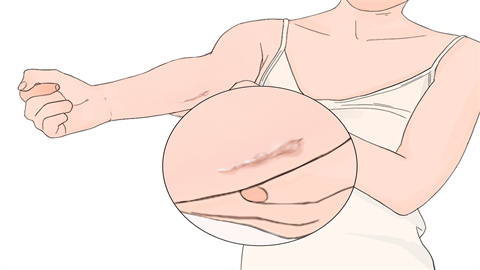
1. Daily Care
In terms of daily care, patients should maintain cleanliness and dryness of the scar area, avoiding friction and pressure on the scar. Additionally, attention should be paid to dietary adjustments, avoiding foods that may cause pigmentation, such as brown sugar and light soy sauce. Consuming more high-protein, easily digestible foods, as well as green vegetables and fruits, can aid in skin repair and regeneration.
2. Medication
In the early stages of wound healing, patients can use specific medications under a doctor's guidance to inhibit excessive proliferation of fibroblasts, thereby alleviating scar symptoms. Commonly used medications include heparin sodium cream, asiaticoside cream, vitamin E cream, and others. These medications can be applied topically to the scar area, helping to soften and fade the scar.
3. Laser Therapy
If the incision scar has already developed into a hypertrophic scar or keloid, laser therapy can be an effective option. Laser therapy utilizes the photothermal effect to stimulate collagen remodeling, thus improving the color, texture, and smoothness of the scar. It is suitable for various types of scars and offers good therapeutic results. However, multiple sessions are usually required, and the cost is relatively high.
4. Surgical Excision
For more severe incision scars, such as extensive hypertrophic scars, surgical excision may be considered. After removing the scar tissue surgically, wound repair can be achieved using suturing techniques, flap transplantation, or skin grafting. This can effectively improve the appearance of the scar, but the surgery itself carries certain risks, such as infection and bleeding. Therefore, before opting for surgical treatment, patients should fully understand the risks and benefits and make decisions under a doctor's guidance.
5. Radiotherapy
Radiation therapy is commonly used to prevent postoperative recurrence of keloids. By using X-rays to damage cells within the scar tissue, fibrous tissue proliferation can be inhibited, thus preventing scar recurrence. However, radiation therapy may cause side effects such as skin pigmentation. Therefore, patients should undergo radiotherapy under a doctor's guidance.
During the treatment process, it is important to maintain good lifestyle and dietary habits to promote scar healing and reduce the risk of recurrence.




