Can Pulsatilla (Baitouweng) treat tinea capitis?
Mar 22, 2025
Source: Cainiu Health

Dr. Zhang Xiuhong
Introduction
Mild cases of tinea capitis presenting with increased dandruff and mild itching without obvious skin damage may use Pulsatilla (Baitouweng) as directed by a physician. Pulsatilla has functions of clearing heat, removing toxicity, cooling blood, and relieving itching. It is suitable for tinea capitis symptoms caused by damp-heat or wind-heat. Using a Pulsatilla decoction externally for shampooing may help alleviate scalp inflammation and itching and promote scalp health.
For mild cases of tinea capitis without evident skin damage, Pulsatilla (Baitouweng) may generally be used under medical guidance. However, it should not be used in cases of severe tinea capitis or when significant skin damage or infection is present. If in doubt, it is recommended to seek medical advice in advance. Detailed explanation is as follows:
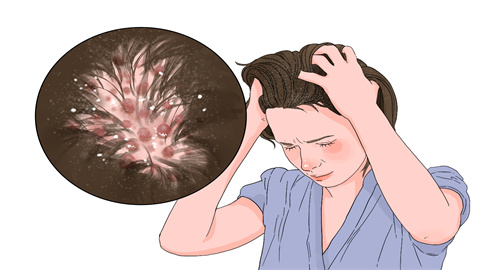
Patients with mild tinea capitis characterized by increased dandruff and slight itching without evident skin damage can use Pulsatilla under medical supervision. Pulsatilla has effects of clearing heat and detoxifying, cooling blood and relieving itching, and is suitable for treating tinea capitis symptoms caused by damp-heat or wind-heat. Using a Pulsatilla decoction for washing the hair externally may help alleviate scalp inflammation and itching, promoting scalp health.
However, for severe cases of tinea capitis or those accompanied by evident skin damage or infection, the use of Pulsatilla may not be appropriate. Severe tinea capitis typically presents with significant erythema, scaling, pustules, or even ulcers, indicating substantial skin injury. The heat-clearing and detoxifying effects of Pulsatilla may be insufficient to control the condition and could potentially interfere with wound healing.
Patients with tinea capitis may follow medical advice to use medications such as clotrimazole cream, ketoconazole cream, or salicylic acid ointment for treatment.
References
[1] Yu Jin, Zhu Min. Guidelines for the Diagnosis and Treatment of Tinea Capitis in China (Revised Edition 2018)[J]. Chinese Journal of Mycology, 2019, 14(01):4-6.
[2] Yang Dan, Si Fuchun. Research Progress on Pharmacological Effects and Clinical Applications of the Classical Pulsatilla Decoction, and Prediction Analysis of Quality Markers[J/OL]. Liaoning Journal of Traditional Chinese Medicine University, 1-9 [Accessed 2025-03-22].