Can Pulsatilla (Baitouweng) treat rectal polyps?
Mar 22, 2025
Source: Cainiu Health

Dr. Zhang Xiuhong
Introduction
Pulsatilla (Baitouweng) can, under certain conditions, serve as an adjunctive treatment for colonic polyps caused by bacterial dysentery infection or damp-heat accumulation type intestinal polyps. However, it is not suitable for all cases of rectal polyps and must be used under the guidance of a physician. Pulsatilla has functions of clearing heat, detoxifying, cooling the blood, and arresting dysentery, and possesses various pharmacological effects including antibacterial, antiviral, and anti-inflammatory properties.
Pulsatilla (Baitouweng) can be used as an adjunctive treatment for colonic polyps caused by bacterial dysentery infection or damp-heat type rectal polyps under certain conditions. However, it is not suitable for all types of rectal polyps and must be used under the guidance of a physician. Detailed explanations are as follows:
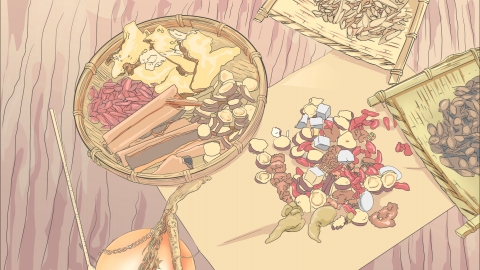
Pulsatilla has the effects of clearing heat, detoxifying, cooling the blood, and arresting dysentery. It also has multiple pharmacological effects, including antibacterial, antiviral, and anti-inflammatory properties. Therefore, for colonic polyps caused by infection with dysentery bacillus, Pulsatilla may inhibit the growth of pathogenic bacteria and reduce inflammation of rectal polyps, thus serving as an adjunctive treatment.
However, rectal polyps may arise from various causes, including inflammation, hyperplasia, and adenomatous changes, and there is a certain risk of malignant transformation. Pulsatilla is cold in nature and possesses the function of clearing heat and cooling the blood; therefore, it is suitable for conditions caused by damp-heat pathogens but not for individuals with deficiency-cold syndromes of the spleen and stomach. In addition, special populations such as pregnant women, lactating women, and children should also use Pulsatilla with caution. For non-damp-heat types of intestinal polyps or other types of rectal polyps, Pulsatilla may not achieve effective therapeutic effects.
Patients should not take medications blindly to avoid delaying treatment or causing adverse consequences.
[References]
[1] Yang Dan, Si Fuchun. Research progress on pharmacological effects and clinical applications of the classic Pulsatilla decoction and prediction analysis of quality markers[J/OL]. Journal of Liaoning University of Traditional Chinese Medicine, 1-9 [Accessed 2025-03-22].
[2] Liu Yuxin. A study on the cold and warm properties of Pulsatilla. Henan Traditional Chinese Medicine, 2021, 41(08): 1155-1158.