


Can Hei Shun Pian treat acne?
Mar 26, 2025
Source: Cainiu Health
Dr. Zhang Xiuhong
Introduction
Black顺片 has a pungent flavor and is extremely hot in nature. It is toxic and enters the heart, spleen, and kidney meridians. It functions to replenish fire and assist yang, as well as to dispel cold and relieve pain. According to TCM theory, the development of acne may be related to internal damp-heat and yang deficiency with cold coagulation. When acne patients present with symptoms of yang deficiency with cold coagulation and impaired circulation of qi and blood, Black顺片 can improve the cold coagulation condition within the body and promote the circulation of qi and blood through its action of warming yang and dispersing cold.
Acne, also known as pimples, might be treated with Heishunpian under medical guidance as an adjunct therapy, but it should not be used alone or if the patient's constitution is unsuitable. If in doubt, it is recommended to consult a doctor in advance. Detailed explanation is as follows:
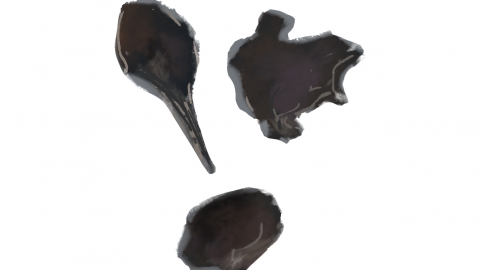
Heishunpian has a pungent taste and is hot in nature; it is toxic and acts on the heart, spleen, and kidney meridians. It functions to warm and support yang energy, dispel cold, and relieve pain. According to traditional Chinese medicine (TCM) theory, acne might develop due to internal damp-heat or yang deficiency with cold stagnation. When acne is manifested as yang deficiency with cold stagnation and impaired circulation of qi and blood, Heishunpian may help alleviate acne by warming yang and dispersing cold, thereby improving the cold-stagnation condition within the body and promoting the circulation of qi and blood.
However, for acne patients with a heat constitution or yin deficiency with fire hyperactivity, using Heishunpian may aggravate internal heat pathogens, worsening acne symptoms such as increased redness and pain. Furthermore, since Heishunpian is toxic, its use must strictly control dosage and be conducted under the guidance of a qualified physician. Overuse or improper use may lead to toxic reactions, such as numbness of the tongue and lips, nausea, and vomiting.
In addition, Heishunpian may have contraindications with other herbs—for example, it interacts adversely with Banxia (Pinellia) and Gualou (Trichosanthes), among others—so it is important to avoid simultaneous use with these herbs during treatment.






