


Can Lycium barbarum (Goji berry) be used as a substitute for Cornus officinalis (Japanese cornel), and why?
Apr 14, 2025
Source: Cainiu Health

Dr. Zhang Xiuhong
Introduction
Under normal circumstances, wolfberry (Lycium barbarum) cannot substitute for Cornus officinalis, as their respective functions and applicable scenarios differ. Although both wolfberry and Cornus officinalis are traditional Chinese medicinal materials, they possess different properties and effects. Wolfberry nourishes the liver and kidneys, improves vision, and moistens the lungs, whereas Cornus officinalis warms and nourishes the liver and kidneys, and helps to consolidate essence and reduce urination. In daily diets, wolfberry is commonly used as a food therapy ingredient.
Goji berries generally cannot replace Cornus officinalis (Shanzhuyu), as there are certain differences between the two in terms of medicinal properties, effects, ability to consolidate vital energy (Yuan Qi), and suitable populations.
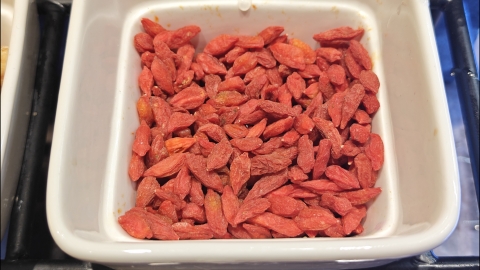
Under normal circumstances, goji berries cannot substitute for Cornus officinalis, mainly due to differences in their respective functions and applications. Although both are traditional Chinese medicinal materials, they have different properties and therapeutic effects. Goji berries can nourish the liver and kidneys, improve vision, and moisten the lungs, whereas Cornus officinalis warms and nourishes the liver and kidneys, and helps to consolidate essence and reduce urinary frequency. In daily diets, goji berries are commonly used as a food therapy ingredient in soups and teas for health maintenance.
Although goji berries also have the effect of consolidating vital energy, their effect may be somewhat inferior compared to Cornus officinalis. The sour and astringent nature of Cornus officinalis enables it to more effectively seal and preserve vital energy, preventing its dissipation. Goji berries are more suitable for individuals with liver and kidney Yin deficiency who require gentle nourishment. Cornus officinalis is better suited for those with liver and kidney deficiency, depleted vital energy, and a need for stronger astringent effects. When using these two herbs, it is important to follow the guidance of a qualified physician to ensure safe and effective use.
In using these two herbs, one should follow the guidance of a qualified physician to ensure the safety and effectiveness of the medication.




