


Can white peony root (Bai Shao) be used as a substitute for prepared rehmannia root (Shu Di Huang)?
Apr 15, 2025
Source: Cainiu Health

Dr. Zhang Xiuhong
Introduction
When only mild nourishment of yin and blood is required, Bai Shao (white peony root) has certain functions of nourishing blood, soothing the liver, relieving spasms, and alleviating pain. It can help improve mild discomfort caused by blood deficiency. In such cases, Bai Shao can be used as an alternative to Shu Di Huang (prepared rehmannia root), although its efficacy is weaker and cannot fully achieve the nourishing intensity of Shu Di Huang. Bai Shao is more suitable for relieving symptoms of liver constraint with blood deficiency or conditions accompanied by pain.
Generally speaking, if the need for nourishing yin and enriching blood is mild, white peony root (Bai Shao) can partially substitute for prepared rehmannia root (Shu Di Huang). However, when strong nourishment or treatment targeting specific symptoms is required, substitution is not recommended. If in doubt, it is advisable to consult a medical professional in advance. Detailed analysis is as follows:
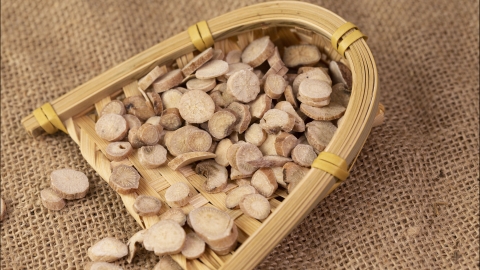
When only mild nourishment of yin and blood is needed, Bai Shao possesses certain functions of enriching blood, soothing the liver, relieving spasms, and alleviating pain, which can help improve mild discomfort caused by blood deficiency. In such cases, Bai Shao may be used as a substitute for Shu Di Huang, although its efficacy is weaker and cannot fully achieve the nourishing strength of Shu Di Huang. Bai Shao is more suitable for alleviating symptoms of liver constraint and blood deficiency or conditions accompanied by pain, rather than situations requiring profound nourishment of yin and essence, thus its substitution range is limited.
If a patient presents significant deficiency of liver and kidney or insufficiency of qi and blood, Bai Shao should not be used to replace Shu Di Huang. Shu Di Huang is particularly effective in nourishing yin, enriching blood, and replenishing essence, exerting a stronger regulatory effect on severe deficiency symptoms. Bai Shao has a relatively cool nature and milder effects; substituting it blindly may lead to insufficient nourishment or delayed recovery.
In addition, in classical herbal formulas such as Liu Wei Di Huang Wan, Shu Di Huang serves as the "command herb" (jun yao), guiding the therapeutic effects into the kidney meridian. At this point, Bai Shao cannot substitute for its meridian tropism characteristics.


