


Can Lycium barbarum (goji berries) and Astragalus membranaceus (huang qi) be steeped together in water for consumption?
Apr 24, 2025
Source: Cainiu Health

Dr. Zhang Xiuhong
Introduction
Wolfberry is neutral in nature and sweet in taste, capable of nourishing the liver and kidneys, improving vision, and moistening the lungs. Astragalus (Huang Qi) is warm in nature and sweet in taste; it effectively replenishes qi, elevates yang energy, and strengthens the exterior to stop sweating. When used together, these two herbs can synergistically enhance physical constitution, particularly suitable for individuals with both qi deficiency and insufficiency of the liver and kidneys, such as those prone to fatigue, physical exhaustion, or blurred vision. This combination provides gentle nourishment and regulation, making it less likely to cause significant side effects. It is recommended to consult a traditional Chinese medicine practitioner before consumption and adjust the ratio and frequency of intake according to individual body constitution.
Generally speaking, Lycium barbarum (goji berries) and Astragalus membranaceus (huang qi) can be steeped together in water for consumption. A detailed explanation is as follows:
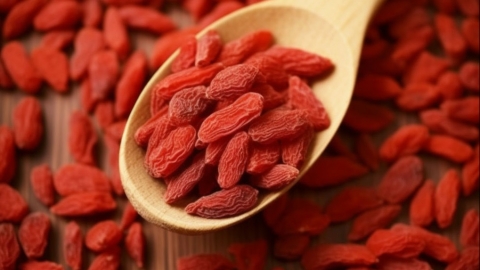
Lycium barbarum is neutral in nature and sweet in taste, capable of nourishing the liver and kidneys, improving vision, and moistening the lungs. Astragalus membranaceus is warm in nature and sweet in taste, possessing functions of replenishing vital energy, uplifting yang energy, strengthening the body's defensive system, and stopping perspiration. When used together, these two herbs can synergistically enhance physical health, particularly suitable for individuals experiencing both qi deficiency and insufficiency of the liver and kidneys, such as those prone to fatigue, physical exhaustion, or blurred vision. This combination offers gentle nourishment and regulation, making it unlikely to cause significant side effects.
Nonetheless, individual body constitutions and dosage control should be considered. Individuals with excessive internal heat or yin deficiency with fire hyperactivity should be cautious, as the warmth of Astragalus may exacerbate internal heat, leading to symptoms such as dry mouth and throat discomfort. Moreover, excessive consumption may cause bloating in individuals with weak spleen and stomach function. Additionally, both herbs may influence drug metabolism; therefore, individuals currently taking hormone medications or immune-modulating drugs should proceed with caution.
It is recommended to consult a traditional Chinese medicine practitioner before consumption, adjusting the proportion and frequency of intake according to individual body constitution, and avoiding long-term or excessive use.






