


Why Can't Orange Daylilies Be Eaten?
Jun 24, 2025
Source: Cainiu Health

Dr. Yu Yongchao
Introduction
Under normal circumstances, orange-colored daylily flowers (Huang Hua Cai) should not be consumed, mainly due to their content of colchicine. Therefore, to ensure food safety, never eat orange-colored daylily flowers. For daily consumption, choose processed dried daylily products that are free from colchicine. Additionally, certain populations, including those allergic to daylily flowers, individuals with spleen and stomach deficiency-cold, and patients with severe digestive dysfunction, should avoid consuming daylily flowers.
Generally speaking, orange daylilies (Hemerocallis citrina) are not edible, mainly due to their content of colchicine. Detailed explanations are as follows:
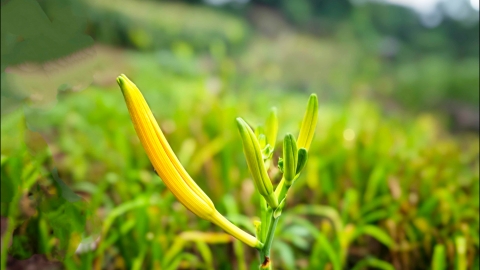
Colchicine itself is highly toxic. Once ingested, it is oxidized into dihydrocolchicine inside the human body, which can irritate the gastrointestinal tract and respiratory system, causing poisoning symptoms such as nausea, vomiting, abdominal pain, and diarrhea. Severe cases may lead to liver and kidney damage or even endanger life. Although colchicine in daylilies can be removed through processes like blanching or soaking, orange daylilies are often unprocessed fresh wild varieties that typically contain high levels of colchicine. It is difficult for households to accurately掌握 the methods for effectively removing these toxins, thus posing a significant risk of accidental poisoning.
Therefore, to ensure food safety, never consume orange daylilies. For regular consumption, processed dried daylily products free of colchicine should be selected. Additionally, certain populations such as individuals allergic to daylilies, those with spleen and stomach deficiency-cold syndromes, and people with severe digestive dysfunction should consume daylilies cautiously or avoid them altogether to prevent discomfort or worsening of symptoms.






