


What is the difference between high bamboo shoots and water chestnuts?
Jun 26, 2025
Source: Cainiu Health

Dr. Yu Yongchao
Introduction
Water bamboo is a perennial aquatic herbaceous plant of the genus Zizania in the grass family (Poaceae). It was originally a cereal crop, but due to infection by the smut fungus Ustilago esculenta, its stem swells and fails to produce ears and seeds, gradually evolving into a vegetable. The edible part of water bamboo, known as "Jiaobai," is the same species within the Zizania genus of the grass family. Essentially, it is the swollen fleshy stem stimulated by the smut fungus Ustilago esculenta, and is an aquatic plant cultivated as a vegetable. The two names actually refer to the same plant at different developmental stages or under different perspectives.
Generally speaking, there are differences between Gaosun (Zizania latifolia) and Jiaobai (the swollen stem of Zizania latifolia) in terms of botanical properties, appearance, taste and flavor, cooking methods, and nutritional value. A detailed analysis is as follows:
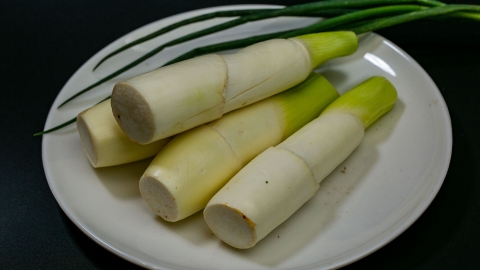
1. Botanical Characteristics: Gaosun is a perennial aquatic herbaceous plant of the Poaceae family and Zizania genus. Originally a cereal crop, it gradually evolved into a vegetable after being infected by the smut fungus Ustilago esculenta, which caused its stem to swell and prevented it from producing panicles and seeds. Jiaobai is essentially the edible fleshy swollen stem of the same plant stimulated by Ustilago esculenta. It is a water plant cultivated as a vegetable. In fact, both names refer to the same plant at different developmental stages or under different understandings.
2. Appearance: Gaosun plants are tall with erect stems and flat, long, dark green leaves. Immature Jiaobai appears firm and smooth, with a pale white or light green peel. When mature, the peel darkens in color, and the inner fleshy stem becomes enlarged and spindle-shaped, wrapped in prominent leaf sheaths.
3. Taste and Flavor: Gaosun that has not been infected by Ustilago esculenta has a texture similar to common cereals, relatively hard, and chewy when cooked. Jiaobai, on the other hand, is tender and delicate in texture, crisp and juicy when chewed, with a faint fragrance and no coarseness typical of Gaosun. It retains its unique flavor whether eaten raw, stir-fried, or stewed.
4. Cooking Methods: Gaosun is commonly used as a staple food, suitable for cooking porridge or making pastries after being ground into flour. As a vegetable, Jiaobai offers diverse culinary uses: it can be cut into strips and stir-fried with shredded meat or shrimp, sliced and served cold, or cooked in soups with other ingredients, adapting well to various cooking methods.
5. Nutritional Value: Gaosun is rich in starch, protein, and B vitamins, providing ample energy for the body. Jiaobai contains abundant dietary fiber, vitamins, and minerals such as potassium and phosphorus. Dietary fiber promotes intestinal motility, vitamins help maintain normal metabolism, and minerals benefit the regulation of bodily functions.
To distinguish between Gaosun and Jiaobai, one should consider the plant's morphology, edible parts, and culinary purposes. If the swollen stem is intended for consumption, choose tender Jiaobai; if a cereal-like texture is desired, opt for uninfected Gaosun plants.





