Do you need to blanch water bamboo shoots?
Jun 28, 2025
Source: Cainiu Health

Dr. Yu Yongchao
Introduction
In general, water bamboo shoots (Zizania latifolia) should be blanched. When blanching, note that after washing and cutting the water bamboo shoots into pieces, they should be cooked in boiling water for 1-2 minutes only. The time should not be too long to avoid destroying heat-sensitive nutrients such as B vitamins and vitamin E. After blanching, they can be rinsed with cold water to maintain crispness and tenderness according to cooking needs, or used directly in subsequent dishes.
Under normal circumstances, water bamboo should be blanched. The specific analysis is as follows:
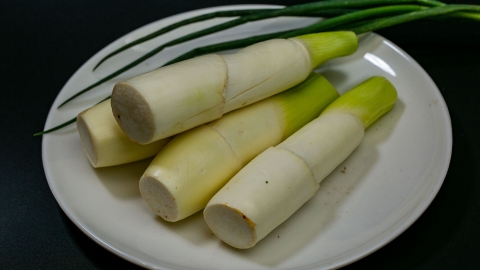
Water bamboo contains a certain amount of oxalic acid. Blanching can effectively remove some of the oxalic acid, preventing it from combining with calcium to form calcium oxalate, which is difficult to absorb. This reduces the astringent taste during consumption and allows the body to absorb minerals such as calcium and magnesium in the water bamboo more fully. Moreover, blanching makes the texture of water bamboo softer, allowing it to absorb flavors more easily during subsequent cooking. Whether stir-frying, making cold dishes, or stewing soup, blanching can make the texture more tender and avoid the coarseness and hardness caused by coarse fibers. In addition, blanching also has an initial sterilization effect, removing any residual pesticides, bacteria, or impurities on the surface of the water bamboo. This is especially important for raw consumption scenarios such as cold dishes, where blanching can significantly reduce food safety risks.
When blanching, note that after washing and cutting the water bamboo into pieces, it should be placed in boiling water for about 1-2 minutes. The time should not be too long, to avoid destroying heat-sensitive nutrients such as the B-vitamin complex and vitamin E. After removing from the water, you may choose to rinse with cold water to maintain crispness and tenderness, depending on your cooking needs, or proceed directly to the next steps of meal preparation.