


Can endometrial polyps be detected by B-ultrasound?
Jul 10, 2025
Source: Cainiu Health

Dr. Zhang Lu
Introduction
In general, B-ultrasound can detect endometrial polyps, but it does have certain limitations. If you experience any discomfort, it is recommended to seek medical attention promptly, identify the underlying cause, and receive appropriate treatment under the guidance of a physician. However, if the endometrium is significantly thickened or the patient has other uterine conditions, such as uterine fibroids, this may also affect the accuracy of B-ultrasound in identifying polyps.
Generally, B-ultrasound can detect endometrial polyps, but it does have certain limitations. If you experience any discomfort, it is recommended to seek medical attention promptly, identify the underlying cause, and receive symptomatic treatment under a doctor's guidance. Detailed analysis is as follows:
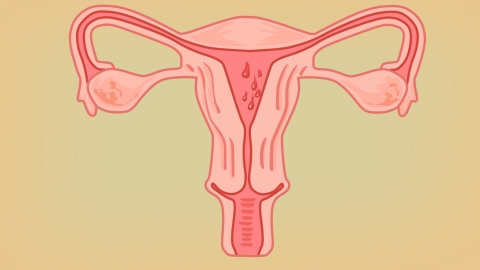
B-ultrasound is a commonly used imaging method, and its imaging principle is based on the reflected echoes produced when ultrasound waves encounter different tissues. When endometrial polyps are present, differences in acoustic characteristics between the polyp tissue and the surrounding normal endometrial tissue result in distinct appearances on B-ultrasound images. For larger-sized or superficially located endometrial polyps, B-ultrasound can usually clearly visualize them as localized thickening or protrusion of the endometrium, appearing as nodular lesions with high or moderate echogenicity and relatively clear boundaries.
However, if the endometrium is significantly thickened or the patient has other uterine conditions such as uterine fibroids, this may affect the accuracy of B-ultrasound in identifying polyps. To avoid missed diagnosis or delayed treatment, it is recommended to undergo ultrasound examination under the guidance of a professional gynecologist.



