


Can cicada shells remove dampness from the body?
Aug 01, 2025
Source: Cainiu Health

Dr. Sun Lianqing
Introduction
Under normal circumstances, as a traditional Chinese medicinal material, cicada slough (the shed exoskeleton of a cicada) has certain medicinal value according to traditional Chinese medicine (TCM) theory. However, when used alone, it is difficult to directly achieve the effect of removing dampness from the body. The medicinal use of cicada slough must follow TCM theory and proper medication guidelines, and should not be blindly used for eliminating dampness. In daily life, if one wishes to improve internal dampness conditions, adjustments to the dietary structure may be effective.
Generally speaking, as a traditional Chinese medicinal material, the cicada slough (Cicadae Periostracum) has certain medicinal value according to traditional Chinese medical theory, but it is difficult to directly achieve the effect of eliminating dampness when used alone. A detailed analysis is as follows:
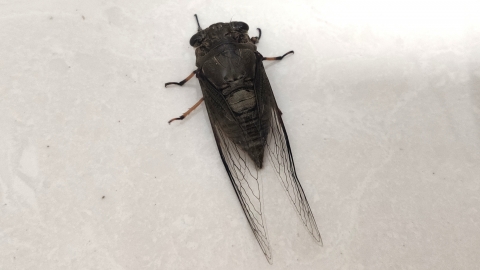
The cicada slough has a sweet and salty taste and a cool property. Its primary functions include疏散风热 (dispersing wind-heat),利咽开音 (relieving sore throat and improving voice),透疹 (promoting eruption of rashes),明目退翳 (improving vision and removing corneal opacity), and息风止痉 (calming liver wind and stopping convulsions). According to its traditional therapeutic effects, cicada slough does not have a clear dampness-resolving function and therefore cannot directly eliminate dampness from the body. If internal dampness is excessive, relying solely on cicada slough would be insufficient for effective regulation.
In clinical TCM practice, eliminating dampness typically requires the combined use of multiple herbs based on the specific syndrome pattern. Cicada slough is generally not a core herb in formulas designed to resolve dampness; rather, it is primarily used to treat conditions such as wind-heat感冒 (wind-heat感冒), sore throat, infantile convulsion, and spasms. If one intends to eliminate dampness, it is necessary to combine herbs with dampness-resolving properties, such as Poria (Fuling), Coix seed (Yiyiren), and Atractylodes (Cangzhu), under the guidance of a qualified practitioner for syndrome differentiation and treatment.
The medicinal use of cicada slough should follow TCM theory and medication guidelines and should not be blindly used for dampness removal. In daily life, if one wishes to improve internal dampness conditions, adjustments to the diet, such as reducing intake of raw, cold, and greasy foods and appropriately consuming food items like Chinese yam (Shanyao) and red beans (Hongdou), along with moderate exercise to promote metabolism, can be helpful.



