


What are the differences between lychee and longan?
Aug 06, 2025
Source: Cainiu Health

Dr. Yu Yongchao
Introduction
Under normal circumstances, litchi and longan are two distinct tropical fruits, differing in aspects such as fruit appearance, pulp characteristics, taste, growing environment, and nutritional benefits. If differentiation is needed during selection or consumption, one can make a judgment based on their specific characteristics. In daily life, when purchasing, one can quickly distinguish between the two based on appearance and size. Both litchi and longan are considered warm-natured fruits.
Generally speaking, lychee and longan are two different tropical fruits, which differ in fruit appearance, pulp characteristics, taste, growing environment, nutritional value, and health benefits. If differentiation is needed during selection or consumption, one can make a judgment based on their specific characteristics. The detailed analysis is as follows:
1. Fruit Appearance
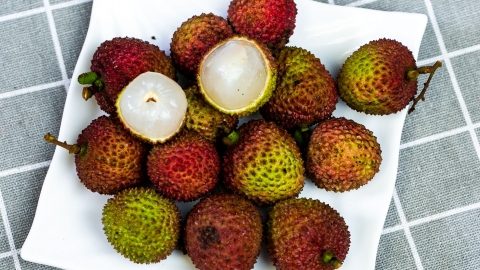
Lychee fruits are relatively larger, round or heart-shaped, with thick skin covered in raised, scaly patterns. Their color is typically bright red or purplish red, appearing vivid when mature. In contrast, longan fruits are smaller and spherical, with thin skin that is smooth in texture, typically in hues of yellowish brown or grayish brown, and the color appears more subdued when mature.
2. Pulp Characteristics
Lychee pulp is thick and translucent, mostly milky white or pale yellow in color, enclosing a relatively large seed, and the pulp adheres closely to the shell. Longan pulp is thinner, also translucent, closer to white in color, with a smaller seed, and the pulp is loosely attached to the shell, making it easier to peel away.
3. Taste and Texture
Lychee has a strong flavor, sweet with a hint of sourness, with crisp, tender, and juicy flesh, offering a rich mouthfeel. Longan has a delicate sweetness, with higher sugar content and less noticeable sourness. Its flesh is soft and smooth, with less juice, providing a smoother and more mellow texture.
4. Growing Environment
Lychee requires higher temperatures and thrives in areas with an annual average temperature above 20°C and without severe winter cold. It prefers ample sunlight and a humid environment, and is widely cultivated in southern China, such as Guangdong, Guangxi, Fujian, and other regions. Longan has slightly stronger adaptability and can grow in relatively cooler conditions, with a slightly higher cold tolerance than lychee. In addition to the regions mentioned above, it is also cultivated in Sichuan, Yunnan, and other areas.
5. Nutritional and Health Benefits
Both lychee and longan are rich in nutrients such as vitamins, glucose, and sucrose. However, lychee contains higher levels of vitamin C, which helps replenish energy and stimulate appetite. Longan contains more protein and iron, and is known for its effects of nourishing blood and qi, and benefiting the heart and spleen. It is commonly used in food therapy.
In daily life, one can quickly distinguish between the two by appearance and size during purchase. Both lychee and longan are heaty fruits and should not be consumed in excess to avoid causing heatiness. When storing, they should be kept in a cool place. Lychee can be refrigerated for short-term freshness preservation, while longan is relatively more storage-tolerant. Before consumption, they should be thoroughly washed, and the flesh can be eaten directly after peeling off the shell, making sure not to accidentally consume the seed.




