


Does drinking ice water cause dampness in the body?
Aug 11, 2025
Source: Cainiu Health

Dr. Sun Lianqing
Introduction
Under normal circumstances, whether drinking cold water leads to excessive dampness depends on the frequency and amount consumed. Drinking a small amount of cold water occasionally generally does not cause excessive dampness; however, long-term and excessive consumption of cold water may lead to dampness accumulation. To avoid dampness-related issues caused by drinking cold water, it is advisable to control the intake of cold water and opt for warm or room-temperature beverages whenever possible.
In general, whether drinking cold water leads to excessive dampness depends on the frequency and quantity consumed. Occasionally drinking small amounts of cold water usually does not cause excessive dampness; however, long-term and excessive consumption of cold water may lead to dampness accumulation. The detailed analysis is as follows:
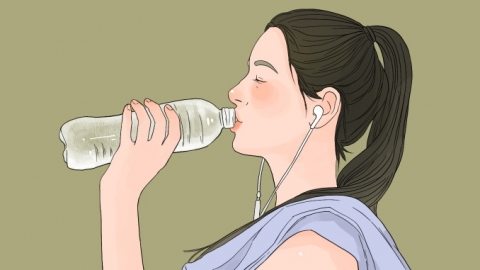
If cold water is consumed only occasionally and in small amounts, the body can adjust promptly without significantly affecting the function of the spleen and stomach, thus dampness accumulation won't occur. In this case, the brief stimulation caused by cold water will be quickly adapted by the body, and there's no need to worry about dampness-related issues.
When large quantities of cold water are consumed over a prolonged period, the cold temperature may impair the yang energy of the spleen and stomach, weakening their transformation and transportation functions. Consequently, water-dampness cannot be properly metabolized and may accumulate in the body, potentially causing dampness excess. This often manifests as symptoms such as abdominal distension, loose stools, thick and greasy tongue coating, etc. In such cases, intake of cold water should be reduced to protect the spleen and stomach.
To avoid dampness-related problems caused by drinking cold water, it is advisable to control the amount of cold water consumed daily and opt for warm or room-temperature beverages instead. Additionally, incorporating spleen-warming foods such as yam and ginger into the diet can enhance the spleen and stomach's transforming and transporting functions.


