


What plant is Ophiopogon japonicus?
Sep 03, 2025
Source: Cainiu Health

Dr. Sun Lianqing
Introduction
Under normal circumstances, Ophiopogon japonicus (L.f) Ker-Gawl is a perennial evergreen herbaceous plant of the Liliaceae family and Ophiopogon genus, possessing both ornamental value and medicinal as well as edible value. When cultivating Ophiopogon japonicus in daily practice, it is important to maintain moist but well-drained soil, avoid exposure to intense direct sunlight, and select loose, fertile sandy loam soil, which will better promote plant growth and help maintain its desirable ornamental or medicinal qualities.
Generally speaking, Ophiopogon japonicus (L.f) Ker-Gawl is a perennial evergreen herbaceous plant of the Liliaceae family, genus Ophiopogon, possessing ornamental, medicinal, and edible values. Detailed analysis is as follows:
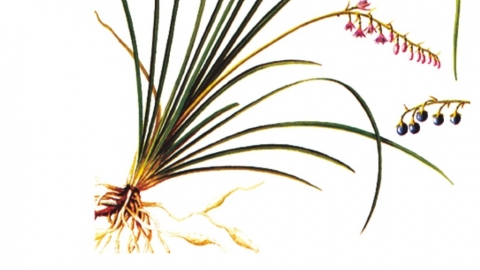
Ophiopogon japonicus has a compact plant form, with short rhizomes and slender fibrous roots. Some fibrous roots become swollen in the middle or at the ends, forming fusiform fleshy tuberous roots, which are the main medicinal part of the plant. The leaves are linear, usually arising from the base, reaching lengths of 10–30 cm, with smooth edges and no serrations. The overall appearance is fresh and elegant, making it suitable as ground cover or for ornamental potted planting. Regarding its uses, the dried tuberous roots are a traditional Chinese medicinal herb, widely applied in traditional Chinese medicine theory. It has functions of nourishing yin and body fluids, moistening the lungs, and clearing the heart, and can help alleviate symptoms such as irritability and insomnia, and dry cough due to lung dryness. Its tuberous roots may also be used in small amounts for daily consumption, such as cooking porridge or steeping in hot water.
When planting Ophiopogon japonicus in daily cultivation, attention should be paid to keeping the soil moist but without waterlogging, avoiding direct intense sunlight, and selecting loose, fertile sandy loam soil, which can better promote plant growth and maintain good ornamental or medicinal quality.



