


What are the differences between safflower and saffron?
Sep 05, 2025
Source: Cainiu Health

Dr. Sun Lianqing
Introduction
Under normal circumstances, the differences between safflower and saffron are reflected in aspects such as family/species classification, therapeutic effects, medicinal parts, color and morphology, and usage contraindications. In addition, there are differences in their odors: safflower has a mild scent, while saffron has a unique aromatic odor. When purchasing, it is important to use legitimate channels to avoid counterfeit products due to their similar appearances.
Generally speaking, the differences between Carthamus (Carthamus tinctorius) and Saffron (Crocus sativus) are reflected in aspects such as family classification, species variety, therapeutic effects, medicinal parts, color and appearance, and usage contraindications. A detailed analysis is as follows:
1. Family Classification and Species Variety
Carthamus belongs to the genus Carthamus of the family Asteraceae and is an annual herbaceous plant. Common varieties are mostly medicinal cultivated types. Saffron belongs to the genus Crocus of the family Iridaceae and is a perennial herbaceous plant. Its species are relatively uniform and mostly imported cultivated varieties. The two have completely different taxonomic classifications and plant growth cycles, making this a fundamental distinction.
2. Therapeutic Effects and Emphasis
The main effects of Carthamus are promoting blood circulation to regulate menstruation, dispersing blood stasis, and relieving pain. It is commonly used to treat dysmenorrhea, amenorrhea, traumatic injuries, and similar conditions, with relatively mild effects. In addition to promoting blood circulation, Saffron also has functions including cooling the blood to detoxify, clearing heat, and calming the mind. It can be used to treat depression, chest discomfort, and maculopapular rashes caused by febrile diseases. Its blood-activating effect is stronger. As the range and intensity of effects differ, there is a distinction in their therapeutic emphasis.
3. Medicinal Parts
The medicinal part of Carthamus is the entire dried tubular flower; after harvesting, impurities are removed and it is then ready for medicinal use, making the collection process relatively simple. The medicinal part of Saffron consists only of the three stigmas within each flower. Each flower requires manual separation of the stigma, which has a very low yield, making the process labor-intensive. These differences in medicinal parts directly affect production and cost, making this a key distinction.
4. Color and Appearance
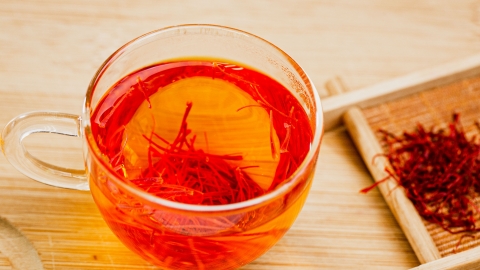
After drying, Carthamus appears orange-red or light red, with a relatively thick and short tubular shape, measuring about 1–2 cm in length. It has a hard texture and lacks distinctive water-soluble pigmentation. In contrast, dried Saffron appears dark purplish red, with long, thread-like stigmas that have irregular tooth-like projections at the tip. The length is approximately 1–3 cm. When soaked in water, the water turns a bright golden yellow. These differences in color and water solubility allow for quick identification, making appearance an intuitive distinguishing factor.
5. Usage Contraindications
Although Carthamus has blood-circulating properties, its effect is mild. Except for pregnant women who should use it cautiously, it is generally safe for most people when used within recommended dosages. Saffron has a very strong blood-activating effect and also exerts certain effects on the nervous system. Its use by pregnant women may lead to miscarriage. Patients with bleeding disorders, hyperthyroidism, or hypothyroidism may experience worsening of their original symptoms upon using Saffron. Therefore, its usage contraindications are stricter.
In addition, there are differences in odor: Carthamus has a mild scent, while Saffron has a unique aromatic fragrance. When purchasing, it is important to use legitimate channels to avoid counterfeit products due to their similar appearance. It is advisable to consult a professional to determine the appropriate choice before use.



