


How is laser treatment for the eyes performed?
Nov 17, 2025
Source: Cainiu Health

Dr. Wang Shuai
Introduction
Laser eye treatments primarily correct refractive errors or manage ocular conditions through excimer laser, femtosecond laser, half-femtosecond laser, full-femtosecond laser, and laser photocoagulation. These methods precisely target ocular tissues using laser technology to achieve therapeutic goals. Individuals considering treatment are advised to visit a reputable ophthalmic institution for evaluation and assessment. The procedure involves using laser to reshape the corneal surface or stromal layer.
Laser eye treatments primarily correct refractive errors or manage ocular conditions through excimer laser, femtosecond laser, half-femto laser, full-femto laser, and laser photocoagulation. These methods precisely target ocular tissues using laser technology to achieve therapeutic goals. If treatment is needed, it is recommended to visit a reputable ophthalmic institution for evaluation and consultation.
1. Excimer Laser: This method reshapes the cornea by precisely ablating the corneal surface or stromal layer to correct myopia, hyperopia, and astigmatism. It involves a small incision and offers rapid recovery, making it suitable for patients with mild to moderate refractive errors.
2. Femtosecond Laser: A femtosecond laser is used to create a corneal flap, followed by excimer laser ablation of the stromal layer. This technique provides greater precision, causes less trauma, and results in better visual quality after surgery. It has a broad applicability, including some patients with high myopia.
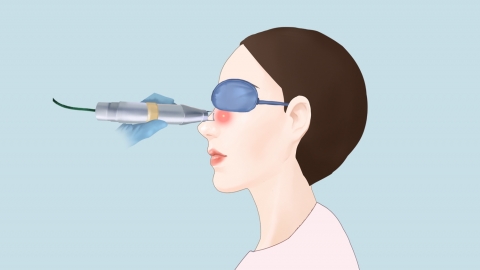
3. Half-Femto Laser (LASIK with femtosecond flap): Combining the advantages of femtosecond flap creation and excimer laser ablation, this method allows personalized adjustment of ablation parameters, offering superior correction of astigmatism. It is ideal for individuals with good corneal conditions who have high demands for visual quality.
4. Full-Femto Laser (SMILE): This technique does not require creating a corneal flap. Instead, a femtosecond laser creates a lenticule within the corneal stroma, which is then removed through a small incision. It causes minimal trauma, enables quick recovery, and provides strong postoperative resistance to mechanical impact. It is suitable for patients with moderate to high myopia and astigmatism.
5. Laser Photocoagulation: This treatment uses the thermal effect of laser to coagulate diseased tissue, commonly used for retinal tears and diabetic retinopathy. It helps preserve vision by sealing abnormal blood vessels or repairing retinal breaks.
After surgery, follow medical instructions for using anti-inflammatory eye drops and avoid rubbing the eyes or allowing contaminated water to enter them. Refrain from strenuous exercise and prolonged eye use in the short term. Wear protective sunglasses outdoors to shield against bright light. Maintain a light diet rich in vitamins to support eye recovery.






