What causes white tissue on the eyeball, and what should be done about it?
Nov 19, 2025
Source: Cainiu Health

Dr. Wang Lei
Introduction
In general, the appearance of white tissue on the eyeball may be caused by conditions such as conjunctival lymphatic cysts, pinguecula, pterygium, phlyctenular conjunctivitis, or conjunctival concretions. Depending on the specific situation, improvements can be achieved through general care, medication, or surgical treatment. It is important to develop good eye-use habits in daily life, avoid prolonged screen exposure, and maintain proper eye hygiene.
Under normal circumstances, the appearance of white tissue on the eyeball may be caused by conditions such as conjunctival lymphocele, pinguecula, pterygium, phlyctenular conjunctivitis, or conjunctival concretions. Depending on the specific situation, improvements can be achieved through general care, medication, or surgical treatment. Detailed analysis is as follows:
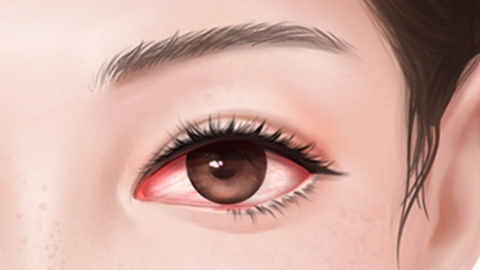
1. Conjunctival Lymphocele
When conjunctival lymphatic vessels become blocked, lymph fluid accumulates and forms a transparent or milky white blister-like protrusion. It is important to rest the eyes, avoid rubbing them, and gently apply warm compresses with a warm towel to promote lymphatic circulation.
2. Pinguecula
Prolonged exposure to ultraviolet light or irritation from wind and dust causes thickening and proliferation of the conjunctival tissue in the interpalpebral fissure area, resulting in a yellowish-white elevation. Wearing sunglasses outdoors helps reduce irritation. Maintaining ocular cleanliness and preventing dryness are also recommended.
3. Pterygium
Conjunctival tissue proliferates due to external stimuli and grows triangularly toward the cornea, appearing like a white membranous growth. Treatment may include pranoprofen eye drops, fluorometholone eye drops, or tobramycin-dexamethasone eye drops under medical guidance. In severe cases, surgical excision of the pterygium combined with autologous conjunctival grafting may be required.
4. Phlyctenular Conjunctivitis
This condition results from an immune reaction causing localized conjunctival inflammation, presenting as grayish-white nodules with surrounding redness. Treatment under medical supervision may involve sodium cromoglicate eye drops, lodoxamide eye drops, or tobramycin eye drops. A balanced diet rich in vitamins is also beneficial.
5. Conjunctival Concretions
These occur when shed conjunctival epithelial cells and secretions accumulate and calcify, forming white granular elevations. A sterile needle can be used by a healthcare provider to remove the concretions. Post-procedure, levofloxacin eye drops, erythromycin eye ointment, or chloramphenicol eye drops may be used to prevent infection.
Routine eye care habits should be cultivated, including avoiding prolonged screen time and maintaining good ocular hygiene. Protective measures should be taken outdoors to minimize environmental irritation. If the white, flesh-like growth increases in size or is accompanied by vision loss or pain, prompt medical evaluation and treatment are necessary.