


Can dry eye syndrome cause eye swelling?
Nov 18, 2025
Source: Cainiu Health

Dr. Liu Wenmin
Introduction
Whether dry eye syndrome causes eye swelling depends on the severity of the condition and accompanying factors. Mild dry eye typically does not lead to swelling, but moderate to severe cases, especially when associated with inflammation or allergies, may result in eye swelling. It is important to maintain appropriate indoor humidity, avoid direct exposure of the eyes to air conditioning, and take breaks by looking into the distance every 40 minutes of visual tasks. Preservative-free artificial tears can be used to lubricate the ocular surface.
Dry eye syndrome may or may not cause eye swelling, depending on the severity of the condition and accompanying factors. Mild dry eye typically does not lead to swelling, whereas moderate to severe cases—especially when associated with inflammation or allergies—may result in eye swelling. The detailed analysis is as follows:
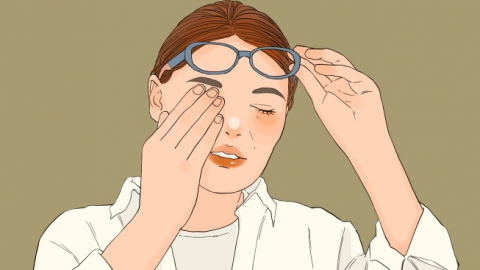
Mild dry eye primarily results from insufficient tear production or excessive tear evaporation, causing symptoms such as dryness, foreign body sensation, and visual fatigue. Since there is no significant inflammatory response on the ocular surface and the eyelid and conjunctival tissues are not irritated, swelling generally does not occur. In such cases, discomfort can be relieved by using artificial tears and reducing screen time.
In patients with moderate to severe dry eye, prolonged tear deficiency damages the ocular surface epithelial cells, triggering chronic inflammation. Inflammatory mediators stimulate eyelid tissue, leading to local congestion and edema. If conditions such as allergic conjunctivitis are also present, the combination of allergic reactions and dry eye symptoms can exacerbate swelling, often accompanied by itching and increased eye discharge.
To manage the condition, maintain appropriate indoor humidity and avoid direct exposure of the eyes to air conditioning. Take breaks every 40 minutes of screen use by looking into the distance. Use preservative-free artificial tears to moisturize the ocular surface and avoid rubbing the eyes. When outdoors, wear wind-protective goggles to reduce tear evaporation, thereby minimizing the risks of dry eye and associated swelling.




