


How is the tetanus shot administered?
Nov 25, 2025
Source: Cainiu Health

Dr. Liu Wenmin
Introduction
The administration of tetanus shots generally involves assessing the type of wound, selecting the appropriate injection, performing an allergy test, and determining the injection site. Doctors first evaluate the depth of the wound and the degree of contamination. For deep or severely contaminated wounds (such as those caused by rusty metal cuts or animal bites), prompt injection is required. For superficial, clean wounds, whether an injection is needed depends on the patient's prior immunization history.
Tetanus shot administration generally includes assessing the type of wound, selecting the appropriate injection, performing an allergy test, determining the injection site, and following the proper injection procedure. A detailed analysis is as follows:
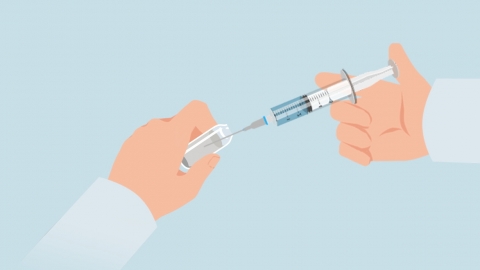
1. Assess the wound type: The doctor will first examine the depth and level of contamination of the wound. Deep or heavily contaminated wounds (e.g., caused by rusty metal cuts or animal bites) require prompt tetanus injection. For superficial and clean wounds, whether an injection is needed depends on the patient's prior immunization history.
2. Select the appropriate injectable: Commonly used agents include tetanus antitoxin (TAT), human tetanus immune globulin (HTIG), and tetanus vaccine. The choice depends on the nature of the wound, allergy history, and immunization status. For example, individuals with allergies should preferably receive human tetanus immune globulin.
3. Perform allergy testing: A skin test is required before administering tetanus antitoxin. A small amount of solution is injected intradermally on the inner forearm to form a wheal. After 20 minutes, if there is no redness, swelling, or itching (negative result), the injection can proceed. If the test is positive, desensitization injections must be performed or an alternative agent used.
4. Determine the injection site: The tetanus vaccine is typically administered into the deltoid muscle on the outer upper arm. Tetanus antitoxin and human tetanus immune globulin can be given via intramuscular injection in the buttocks or the deltoid muscle, taking care to avoid nerves and blood vessels.
5. Follow the injection procedure: Strict aseptic technique must be followed during injection. Medication should be administered slowly. After injection, patients should remain in the observation room for 30 minutes. They may leave only if no adverse reactions such as dizziness or rash occur, ensuring prompt management if any side effects appear.
After injury, seek medical attention promptly—ideally within 24 hours. Keep the wound clean and dry after injection, avoiding contact with water to prevent infection. Patients with a history of severe allergies should inform their doctor in advance to minimize potential risks.



