What is epicanthal fold and how should it be managed?
Dec 01, 2025
Source: Cainiu Health

Dr. Li Feng
Introduction
In general, epicanthus may be caused by congenital genetic factors, incomplete eyelid development in infants and young children, eyelid skin laxity, post-inflammatory scarring in the eye area, tissue hyperplasia following eyelid trauma, or compression from eyelid masses. It is recommended to seek medical attention promptly. After identifying the underlying cause, improvements can be achieved through general management, medication, or other treatments. A detailed analysis is as follows:
Generally, epicanthal folds may be caused by congenital genetic factors, incomplete eyelid development in infants, eyelid skin laxity, post-inflammatory scarring from ocular inflammation, or tissue hyperplasia following eyelid trauma. It is recommended to seek medical attention promptly; after identifying the underlying cause, improvements can be made through general management, medication, or other treatments. Specific analyses are as follows: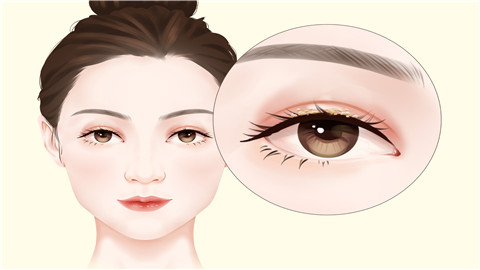
1. Congenital genetic factors: Influenced by family genetics, individuals may be born with epicanthal folds due to inherent characteristics of periorbital skin development. No treatment is necessary if vision or appearance is unaffected. For those seeking cosmetic improvement, surgical correction may be considered after evaluation by a physician.
2. Incomplete eyelid development in infants: Immature eyelid tissues in infants may lead to excess skin at the inner canthus, resulting in temporary epicanthal folds. These usually resolve spontaneously with age. Regular observation is sufficient, and excessive intervention is not required.
3. Eyelid skin laxity: With aging, decreased elasticity and loosening of periorbital skin can result in redundant folds and wrinkles around the eyes. Mild cases may improve with vitamin E-containing eye creams. Severe cases require medical evaluation to determine whether surgical correction is needed; medication is generally unnecessary.
4. Post-inflammatory scarring: Scarring from healed ocular inflammations such as conjunctivitis may pull on the inner canthal skin, forming epicanthal folds accompanied by thickened skin. After diagnosis by a doctor, topical treatments such as silicone gel, mucopolysaccharide polysulfate cream, or centella asiatica glycoside cream may help reduce scarring. Medication should be used according to medical advice.
5. Tissue hyperplasia after eyelid trauma: Following eyelid injury, fibrous tissue overgrowth during healing may lead to epicanthal folds, possibly accompanied by itching. Physicians may recommend topical application of compound heparin sodium allantoin gel or allantoin gel to suppress hyperplasia. Treatment must be confirmed and guided by a doctor.
In daily life, avoid rubbing the corners of the eyes. If the epicanthal fold is associated with vision loss or eye pain, seek prompt medical attention and strictly follow medical instructions—do not self-medicate.