


Where to perform gua sha for Meniere's syndrome?
Dec 10, 2025
Source: Cainiu Health

Dr. Sun Lianqing
Introduction
In general, for Meniere's syndrome, gua sha may be performed on specific areas according to symptoms, such as the Baihui region on the head, the Fengchi region on the neck, the liver俞 to kidney俞 regions on the back, the Zhongwan region on the abdomen, and the Zusanli to Fenglong regions on the lower limbs. Additionally, gua sha should be administered by trained professionals who can adjust the pressure according to individual constitution, avoiding self-treatment that may lead to injury.
Generally, for Meniere's syndrome, gua sha (scraping therapy) can be performed on specific areas according to symptoms, such as the Baihui region of the head, the Fengchi region of the neck, the liver俞 to kidney俞 regions of the back, the Zhongwan region of the abdomen, and the Zusanli to Fenglong regions of the lower limbs. Specific details are as follows:
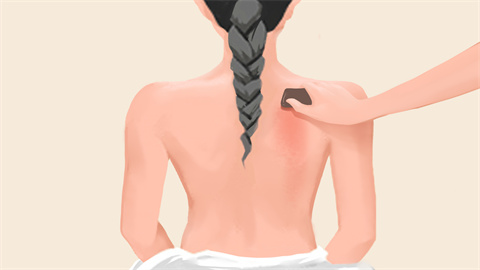
1. Head – Baihui Region
The Baihui region is located around the intersection point of the midline of the scalp and the line connecting the tips of both ears. It is a core area for regulating qi and blood flow in the head. This region is suitable for treating severe vertigo and heavy-headed feelings caused by Meniere’s syndrome. Gua sha here helps unblock meridians in the head, promote circulation of qi and blood, relieve stagnation in the brain, and alleviate discomfort associated with dizziness.
2. Neck – Fengchi Region
The Fengchi region lies beneath the occipital bone at the back of the neck, in the depressions between the upper ends of the sternocleidomastoid and trapezius muscles. This area is close to the vertebral arteries. Since Meniere’s syndrome is often related to abnormal cerebral blood supply, applying gua sha here can relax neck muscles, relieve vascular compression, improve cerebral blood flow, and reduce neck stiffness accompanying vertigo.
3. Back – Liver俞 to Kidney俞 Region
This region extends along the sides of the 9th to 12th thoracic vertebrae and lumbar vertebrae, approximately 1.5 cun lateral to the spine. In traditional Chinese medicine (TCM), Meniere’s syndrome is associated with deficiency of the liver and kidneys. Gua sha on this area helps regulate liver and kidney functions, enhance the body's ability to generate qi and blood, improve internal physiological balance, and reduce the frequency of vertigo episodes at their root cause.
4. Abdomen – Zhongwan Region
The Zhongwan region is located on the anterior midline of the abdomen, 4 cun above the navel and surrounding area. It is indicated when Meniere’s syndrome is accompanied by nausea, vomiting, or poor appetite. Gua sha here regulates spleen and stomach function, promotes digestion and absorption, relieves gastrointestinal discomfort, and indirectly reduces physical reactions triggered by vertigo.
5. Lower Limbs – Zusanli to Fenglong Region
This region runs along the front-lateral side of the lower leg, from 3 cun below Dubi point to 8 cun above the tip of the lateral malleolus. Zusanli strengthens qi and blood, while Fenglong resolves phlegm-dampness—factors commonly linked to internal blockage of phlegm-damp in Meniere’s syndrome. Gua sha over this area helps strengthen the spleen, resolve phlegm, nourish qi and blood, improve systemic circulation, and relieve symptoms such as dizziness and tinnitus.
In addition, gua sha should be performed by trained professionals who can adjust pressure based on individual constitution to avoid injury from improper self-treatment. Daily management includes maintaining regular作息 (daily routines), avoiding fatigue and emotional fluctuations, eating a light diet, and reducing intake of high-salt and high-fat foods to prevent symptom flare-ups.




