


What Causes High Fever and Headache?
Mar 20, 2022
Source: Cainiu Health

Dr. Shi Jizhou
Introduction
What causes high fever and headache? High fever accompanied by headache occurs because elevated body temperature during fever leads to dilation of cerebral blood vessels. Headache caused by fever can be effectively relieved by taking nonsteroidal anti-inflammatory drugs (NSAIDs), such as paracetamol (acetaminophen), aspirin, ibuprofen, or metamizole sodium (e.g., Solpadeine). These medications primarily work by inhibiting prostaglandin synthesis.
Fever—whether in adults or children—can occur for various reasons. Many people assume high fever is simply associated with the common cold; however, persistent high fever warrants prompt medical attention. Prolonged high fever may indicate underlying conditions requiring timely diagnosis and treatment; delaying intervention risks disease progression and worsening of symptoms. So, what causes headache during high fever? Let’s explore this further.
What Causes Headache During High Fever?
Headache accompanying high fever results from elevated body temperature, which triggers dilation of cerebral blood vessels. Such fever-related headaches can be effectively relieved by nonsteroidal anti-inflammatory drugs (NSAIDs), including paracetamol (acetaminophen), aspirin, ibuprofen, or combination analgesics such as Sallitron®.
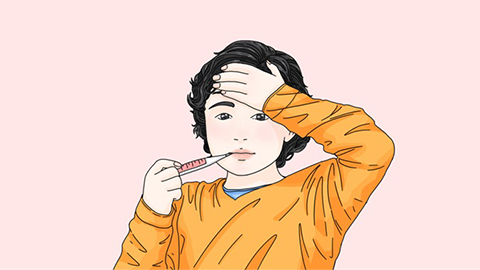
These medications primarily work by inhibiting prostaglandin synthesis, thereby reducing prostaglandin levels in the body and alleviating fever-associated headache. Additionally, intracranial infections—such as meningitis or encephalitis—may also present with fever and headache. In such cases, NSAIDs may provide symptomatic relief, though definitive treatment requires addressing the underlying infection.
During high fever, it is essential to take antipyretic medications regularly and at the prescribed dosage—for example, ibuprofen or Meilin® (a pediatric ibuprofen suspension). Furthermore, maintaining adequate hydration by drinking ample fluids helps prevent dehydration and subsequent electrolyte imbalances.
Physical cooling methods should also be employed: gently wiping the limbs and back with a lukewarm towel—or using alcohol-soaked gauze for擦拭 (note: alcohol sponging is generally not recommended for children due to risk of absorption and toxicity; lukewarm water sponging is preferred)—can assist in heat dissipation and temperature reduction.
We hope the above information is helpful to you.






