What Are the Symptoms of Laryngeal Cancer?
May 16, 2022
Source: Cainiu Health

Dr. Guo Xiheng
Introduction
Laryngeal cancer may present with coughing, and blood may be present in the sputum. Due to tumor-induced irritation, patients often develop a persistent, non-productive (dry) cough, and blood may appear in the sputum. Patients frequently perceive their mucus as thick and viscous, leading to recurrent coughing. As the tumor enlarges, it may obstruct the airway, impairing clearance of tracheobronchial secretions and thereby predisposing to respiratory tract infections, wheezing, or even dyspnea.
In real life, many individuals suffer from laryngitis, and in more severe cases, it can significantly impact daily life and work. However, most patients are unaware of the symptoms associated with laryngitis—or laryngeal cancer.
What Are the Symptoms of Laryngeal Cancer?
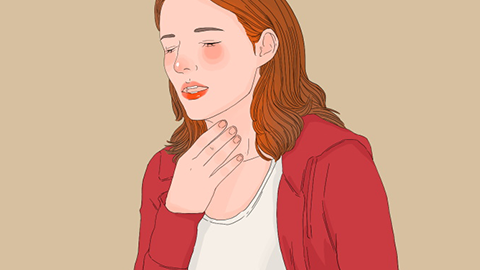
Coughing is a common symptom of laryngeal cancer, often accompanied by blood-tinged sputum. Due to tumor irritation, patients may develop a persistent, non-productive (dry) cough, with blood appearing in the expectorated sputum. Patients frequently experience thick, viscous mucus, leading to recurrent coughing. As the tumor enlarges, it may obstruct the airway, impeding clearance of tracheobronchial secretions and thereby predisposing to respiratory tract infections, wheezing, or even dyspnea. In intermediate-to-advanced stages of laryngeal cancer, patients may present with chronic cough and voice changes (e.g., hoarseness).

The vast majority of laryngeal cancer patients have a long history of smoking and alcohol consumption. Smoking is one of the most important independent risk factors for laryngeal squamous cell carcinoma. Tobacco smoke impairs or suppresses ciliary motility in the respiratory tract, induces mucosal congestion and edema, promotes epithelial hyperplasia and squamous metaplasia—key precancerous changes. The incidence of laryngeal cancer correlates positively with both the number of cigarettes smoked per day and total duration of smoking. Prolonged exposure to secondhand smoke also increases cancer risk. Tobacco use markedly elevates the relative risk of glottic (vocal cord) cancer. Alcohol consumption significantly increases the risk of supraglottic cancer. When combined, smoking and drinking exert a multiplicative (synergistic) effect on cancer risk.
The primary treatment modalities for laryngeal cancer include surgery, radiation therapy, and chemotherapy. Early detection and prompt intervention are critical for all cancers. For instance, in early-stage laryngeal cancer, appropriate surgical resection, alone or combined with radiotherapy and/or chemotherapy, typically yields excellent outcomes. In contrast, advanced-stage disease often requires multimodal therapy—including surgery, radiation, chemotherapy, and increasingly, immunotherapy. We hope this information proves helpful!