


How Is the Expected Date of Delivery (EDD) Calculated from the Last Menstrual Period (LMP)?
Jul 06, 2022
Source: Cainiu Health

Dr. Lv Aiming
Introduction
The calculation of the estimated due date (EDD) is based on the assumption that most pregnant women cannot accurately determine the exact time of conception. Therefore, in clinical practice, the EDD is calculated from the first day of the woman’s last menstrual period (LMP). Pregnancy is considered to last 280 days—equivalent to 10 lunar months (each comprising 28 days) or 40 weeks. If the date of the last menstrual period is unknown, the EDD can be estimated based on the timing of fetal movement.
Pregnancy is a normal physiological process for women. However, during prenatal examinations, healthcare providers typically calculate the expected date of delivery (EDD) based on the first day of the woman’s last menstrual period (LMP). So, how is the EDD calculated from the LMP?
How Is the Expected Date of Delivery Calculated from the Last Menstrual Period?
The calculation of the EDD is standardized in clinical practice because most women cannot accurately determine the exact time of conception. Therefore, medically, the EDD is calculated starting from the first day of the last menstrual period. Pregnancy is considered to last 280 days—equivalent to 10 lunar months (each 28 days long) or 40 weeks. If the date of the last menstrual period is unknown, gestational age may be estimated based on the timing of fetal movement: fetal movements are typically first perceived around weeks 18–20 of pregnancy; adding another 20 weeks to this estimate yields an approximate EDD.
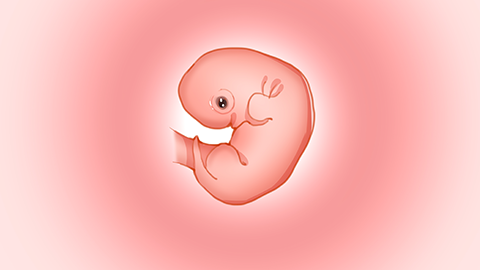
When available, ultrasound measurement of certain fetal anatomical diameters can provide a more accurate assessment of gestational age and thus refine the EDD estimation. However, since EDD calculations often differ from the actual delivery date by 1–2 weeks—and even more so in women with highly irregular menstrual cycles—the estimated date should be regarded as an approximation. Delivery occurring within two weeks before or after the EDD is still considered normal and physiologically appropriate.

The EDD is not a precise prediction of the exact delivery date. If labor has not begun spontaneously by week 41 (i.e., one week beyond full term), medical evaluation and possible induction of labor are recommended. We hope this information is helpful. Wishing you good health and happiness!




