


What does a hypoechoic breast nodule mean?
Aug 05, 2022
Source: Cainiu Health

Dr. Chen Zhe
Introduction
Hypoechoic breast nodules are commonly observed and can be associated with various conditions. The three most common ones are as follows:
First, proliferative breast nodules—breast hyperplasia is extremely common and typically presents with breast pain and proliferative nodules. Patients are advised to undergo a comprehensive ultrasound examination to evaluate the characteristics of these proliferative nodules.
Second, fibroadenoma—a benign breast tumor.
The breasts are an important sign of female maturity. However, during routine health examinations—or even in daily life or at work—some women may be found to have hypoechoic breast nodules upon ultrasound evaluation. What exactly are hypoechoic breast nodules?
What Are Hypoechoic Breast Nodules?
Hypoechoic breast nodules are relatively common and may arise from various underlying conditions. The three most frequent causes are as follows.
First, proliferative breast nodules associated with fibrocystic changes (benign breast hyperplasia). This condition is extremely common and typically presents with breast pain and palpable proliferative nodules. Patients are advised to undergo comprehensive breast ultrasound to assess the characteristics and extent of these nodules.
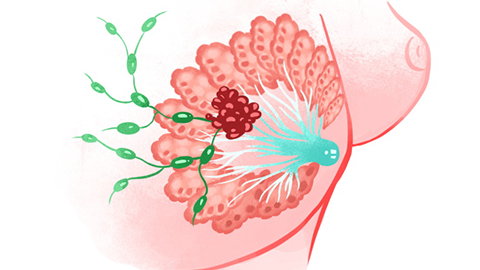
Second, fibroadenoma, a benign breast tumor. It usually manifests as a round or oval, well-circumscribed, smooth-surfaced, mobile mass with hypoechoic echogenicity on ultrasound.
Third, breast cancer, a malignant tumor of the breast. Although it may also appear as a hypoechoic nodule on ultrasound, it typically exhibits distinct features: hard consistency, irregular or spiculated margins, an ill-defined boundary, and poor mobility (i.e., fixed to surrounding tissues and resistant to compression).

Typically, benign hypoechoic breast nodules are round or oval, with sharply defined, smooth margins and good mobility. For small nodules, regular surveillance via breast ultrasound is recommended—typically every six months. Larger nodules generally warrant surgical intervention, which may include conventional open excision or minimally invasive techniques. We hope this article has been helpful to you!




