


Can Liu Wei Di Huang Wan treat insomnia?
Aug 24, 2022
Source: Cainiu Health

Dr. Yang Jun
Introduction
Liu Wei Di Huang Wan can be used to treat insomnia. This is an ancient, well-known herbal formula that is now available as a ready-made traditional Chinese medicine (TCM) preparation. In daily life, people commonly use Liu Wei Di Huang Wan to treat syndromes of kidney yin deficiency. In fact, it can also be employed for insomnia. Generally speaking, insomnia falls under the TCM pattern of “disharmony between the heart and kidneys.” Under normal circumstances, this type of insomnia…
Many people have likely experienced the frustrating phenomenon of being unable to fall asleep, often resorting to repeatedly checking Weibo or counting sheep—yet still failing to drift off. This is a common form of insomnia, which can adversely affect one’s overall health. So, can Liu Wei Di Huang Wan (Rehmannia Six Formula) treat insomnia?
Can Liu Wei Di Huang Wan Treat Insomnia?
Liu Wei Di Huang Wan can indeed be used to treat insomnia. Originally a renowned classical herbal formula from ancient China, it is now widely available as a standardized traditional Chinese medicine (TCM) preparation. In daily practice, it is commonly prescribed for kidney yin deficiency. In fact, it is also effective for certain types of insomnia—particularly those rooted in disharmony between the heart and kidneys. Under normal physiological conditions, the heart’s “fire” descends to warm the kidney’s “yang,” thereby nourishing kidney yin and preventing kidney water from becoming excessively cold. When insomnia arises from kidney yin deficiency or heart-kidney disharmony, Liu Wei Di Huang Wan—under the guidance of a qualified TCM practitioner—may help restore balance and improve sleep.
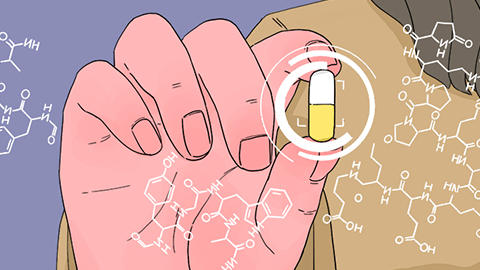
Liu Wei Di Huang Wan helps alleviate insomnia caused by kidney yin deficiency. Its primary action is to nourish yin and tonify the kidneys. Kidney yin deficiency may manifest with symptoms such as lower back and knee soreness or weakness, dizziness, tinnitus, night sweats, seminal emission, spontaneous sweating (especially over the bones), tidal fever, heat sensations in the palms and soles, dry mouth and throat, excessive thirst, scanty or dribbling urination, false-fire toothache, heel pain, delayed closure or abnormal widening of the fontanelle in children, a red tongue with little coating, and a rapid, thready pulse.
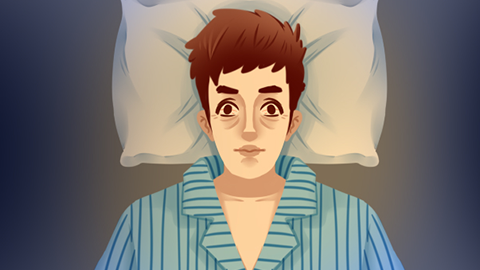
Patients are advised to drink warm water regularly and cultivate healthy lifestyle habits—including consistent early bedtimes and early risings—to support both physical and mental well-being. We hope this information proves helpful.



