How long does it take to wake up after general anesthesia?
Feb 25, 2025
Source: Cainiu Health

Dr. Wang Lei
Introduction
Intermediate-acting anesthetic agents have a relatively longer duration of action. When these drugs are used in larger doses, the patient's awakening time may range from 1 to 1.5 hours. If long-acting anesthetics are administered during surgery, or if the total drug dose is substantial, the awakening time may be prolonged to 1.5–2 hours. In elderly patients, decreased metabolic function leads to slower clearance of drugs from the body.
General anesthesia usually refers to the loss of consciousness induced by anesthetic drugs, and patients typically regain consciousness within 30 minutes to 2 hours after the anesthesia, although the exact time may vary. If discomfort occurs, it is recommended to seek medical attention at a hospital promptly and follow the doctor's instructions for treatment.
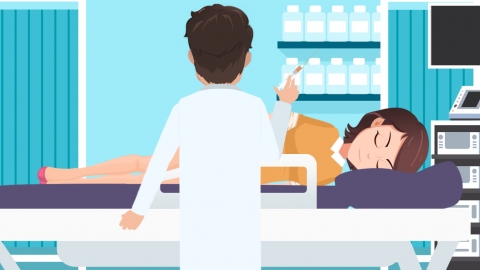
Patients who receive short-acting anesthetic agents, such as propofol and remifentanil, with moderate depth of anesthesia and undergoing shorter surgeries generally begin to gradually awaken within 30 minutes after surgery. These drugs are metabolized quickly and cleared rapidly from the body, resulting in a relatively shorter time for patients to regain consciousness and spontaneous breathing.
Medium-acting anesthetics have a relatively longer duration of action. When these drugs are used in larger doses, the awakening time for patients may be around 1-1.5 hours. If long-acting anesthetics are administered during surgery or the total drug dosage is high, the awakening time may extend to 1.5-2 hours. Elderly patients often have decreased metabolic functions, leading to slower clearance of drugs from the body, and their awakening time might be prolonged to 1-2 hours, or even longer.
The awakening process after general anesthesia is gradual. Medical staff will closely monitor the patient's vital signs and level of consciousness postoperatively to ensure a safe and smooth recovery. After awakening, patients should maintain a clear airway and promptly turn their head to one side to prevent aspiration.