


Can dried Cornus officinalis (Chinese dogwood) be eaten?
Mar 22, 2025
Source: Cainiu Health

Dr. Zhang Xiuhong
Introduction
Cornus officinalis has a sour and astringent taste, with a slightly warm nature, and it enters the liver and kidney meridians. In traditional Chinese medicine, it functions to nourish the liver and kidneys, and to astringe and prevent prolapse. It may be used in treating conditions such as soreness and weakness of the lower back and knees, dizziness, tinnitus, impotence, seminal emission, internal heat with thirst due to deficiency, and blood deficiency with sallow complexion. Dried Cornus officinalis is typically edible and is also used in daily dietary therapy, such as making tea or stewing soups. Proper consumption can provide certain health benefits.
Dried Cornus officinalis (Shanzhuyu) is generally edible and is recommended for moderate consumption.
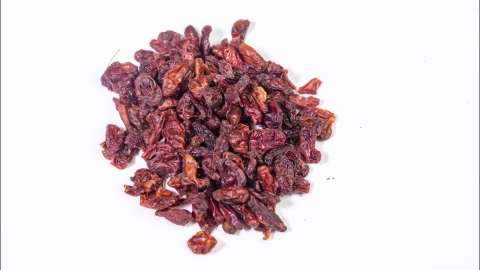
Cornus officinalis has an acidic and astringent taste, with a slightly warm nature, and is associated with the liver and kidney meridians. In traditional Chinese medicine, it functions to nourish the liver and kidneys, and to astringe and prevent prolapse. It may be used in treating conditions such as soreness and weakness of the lower back and knees, dizziness, tinnitus, impotence, seminal emission, internal heat with thirst, and blood deficiency manifested as sallow complexion. Dried Cornus officinalis is generally edible and is also used in daily dietary therapy, such as making tea or stewing soups. Appropriate consumption can provide certain health benefits.
Although dried Cornus officinalis can be consumed, attention should be paid to the dosage. Excessive intake may cause gastrointestinal discomfort; therefore, it is recommended to consume it in appropriate amounts according to individual conditions. Dried Cornus officinalis is generally suitable for individuals with liver and kidney deficiency or physical weakness accompanied by spontaneous sweating. Individuals with excessive internal heat, damp-heat, or yin deficiency with fire hyperactivity should use it cautiously or under the guidance of a physician to avoid triggering heat-related symptoms or causing imbalance of yin and yang in the body.
For medicinal use, proper compatibility and dosage control are required; for dietary purposes, the amount and frequency of consumption should be controlled. It should be washed before decoction; swallowing unwashed dried products directly should be avoided.
References:
[1] Wang Zeping, Dou Xinyue, Shi Kao, et al. Anti-inflammatory activity and liver protective effects of the processed herb-derived component, Deoxymonate, in Cornus officinalis[J]. Chinese Traditional and Herbal Drugs, 2025, 56(01): 154-164.
[2] Cao Yan, Liu Chenxing, Xia Qile. Effects of different polyphenols on the color stability of Cornus officinalis fruit juice[J]. Journal of Food Safety & Quality, 2024, 15(23): 108-114.


