


What are the differences between Asparagus Root (Tian Dong) and Ophiopogon Root (Mai Dong)?
May 12, 2025
Source: Cainiu Health

Dr. Zhang Xiuhong
Introduction
Asparagus is derived from the tuberous roots of Asparagus cochinchinensis (Lour.) Merr., a plant species in the Liliaceae family, while Ophiopogon comes from the tuberous roots of Ophiopogon japonicus (Thunb.) Ker-Gawl., also belonging to the Liliaceae family. Although both belong to the same plant family, they differ in species, resulting in variations in their medicinal properties. The tuberous roots of Asparagus are typically thick and large, with a long fusiform shape and a surface color mostly yellow-white or pale yellow. In contrast, the tuberous roots of Ophiopogon are slender and somewhat curved in shape.
The general differences between Tian Dong (Asparagus root) and Mai Dong (Ophiopogon root) typically include plant origin, physical characteristics, medicinal properties, primary functions, and application scope. A detailed analysis is as follows:
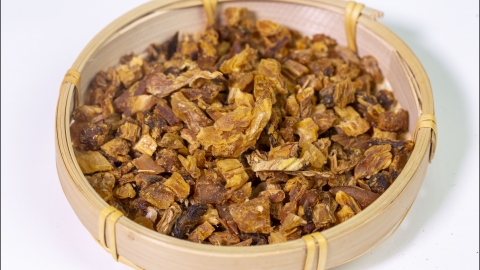
1. Plant Origin: Tian Dong comes from the tuberous roots of Asparagus cochinchinensis (Lour.) Merr., a plant of the Liliaceae family, while Mai Dong originates from the tuberous roots of Ophiopogon japonicus (Thunb.) Ker-Gawl., also a member of the Liliaceae family. Although both belong to the same plant family, their species differ, leading to variations in medicinal properties.
2. Physical Characteristics: The tuberous roots of Tian Dong are generally thicker and larger in size, with a long fusiform shape and a surface color mostly yellow-white or light yellow. In contrast, the roots of Mai Dong are slender and slightly curved, with a yellow-white surface color and fine surface striations.
3. Medicinal Properties: Tian Dong is cold in nature, sweet and slightly bitter in taste, primarily functioning to nourish yin and moisten dryness, with a relatively potent effect. Mai Dong is slightly cold in nature, sweet and slightly bitter in taste, mainly used for nourishing yin and promoting body fluid production. Its medicinal property is relatively mild, making it more suitable for long-term use.
4. Primary Functions: Tian Dong excels at clearing lung heat and moistening the intestines to relieve constipation, commonly used to alleviate symptoms such as dry cough with little phlegm and dry throat. Mai Dong mainly functions to nourish the stomach and generate body fluids, clear heart fire, and calm the mind, making it suitable for improving symptoms like dry mouth and tongue, irritability, and insomnia.
5. Application Scope: Tian Dong is more suitable for individuals with a constitution leaning towards heat or evident symptoms of yin deficiency. Due to its mild medicinal nature, Mai Dong has a broader range of applications, particularly suitable for those needing to regulate the spleen and stomach or alleviate fatigue.
Tian Dong is commonly decocted with other herbs in a soup or made into膏方 (a type of medicinal paste). Mai Dong is widely used in making teas, porridges, and stews, and can also be used directly in medicine, offering a more flexible and diverse range of applications. When choosing between Tian Dong and Mai Dong, one should base the decision on personal needs and constitutional characteristics, using them appropriately under the guidance of a professional.


