


What is an aerosol?
Dec 01, 2025
Source: Cainiu Health

Dr. Ren Yi
Introduction
In terms of application scenarios, aerosols are widely used across multiple fields. In the medical field, they can be used for treating respiratory diseases, such as relieving asthma symptoms, where the medication, after being atomized, acts directly on the respiratory tract. In daily care, certain skincare products and cleaning agents are also formulated as aerosols, offering convenience in use and ensuring even distribution of ingredients.
Generally, aerosols are formulations in which drugs or other active ingredients are combined with suitable excipients and sealed in a pressurized container, allowing the contents to be sprayed as a mist—either in measured doses or non-metered amounts—driven by the pressure of a propellant. If there are any concerns, it is recommended to consult a healthcare professional in advance. A detailed analysis is as follows:
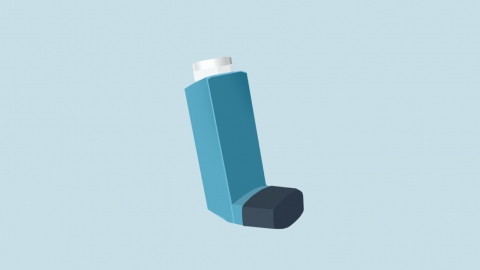
In terms of application scenarios, aerosols are widely used across various fields. In the medical field, they are commonly used for treating respiratory conditions—for example, relieving asthma symptoms—by delivering medication directly to the airways through atomization. In daily personal care, certain skincare products and cleaning agents are also formulated as aerosols, offering convenience and ensuring even distribution of the active components.
From a working principle perspective, the core components of an aerosol are the pressurized container and the propellant. The propellant generates internal pressure within the container; when the valve is opened, this pressure forces the contents to be expelled as fine droplets or a mist. The droplet size and spray dosage vary among different aerosol products and are specifically designed according to their intended use to meet diverse application requirements.
Before using an aerosol, carefully read the instructions to understand the proper method of use and indications. Store the product away from high temperatures, direct sunlight, and strong impacts to prevent container damage and potential safety hazards.






